
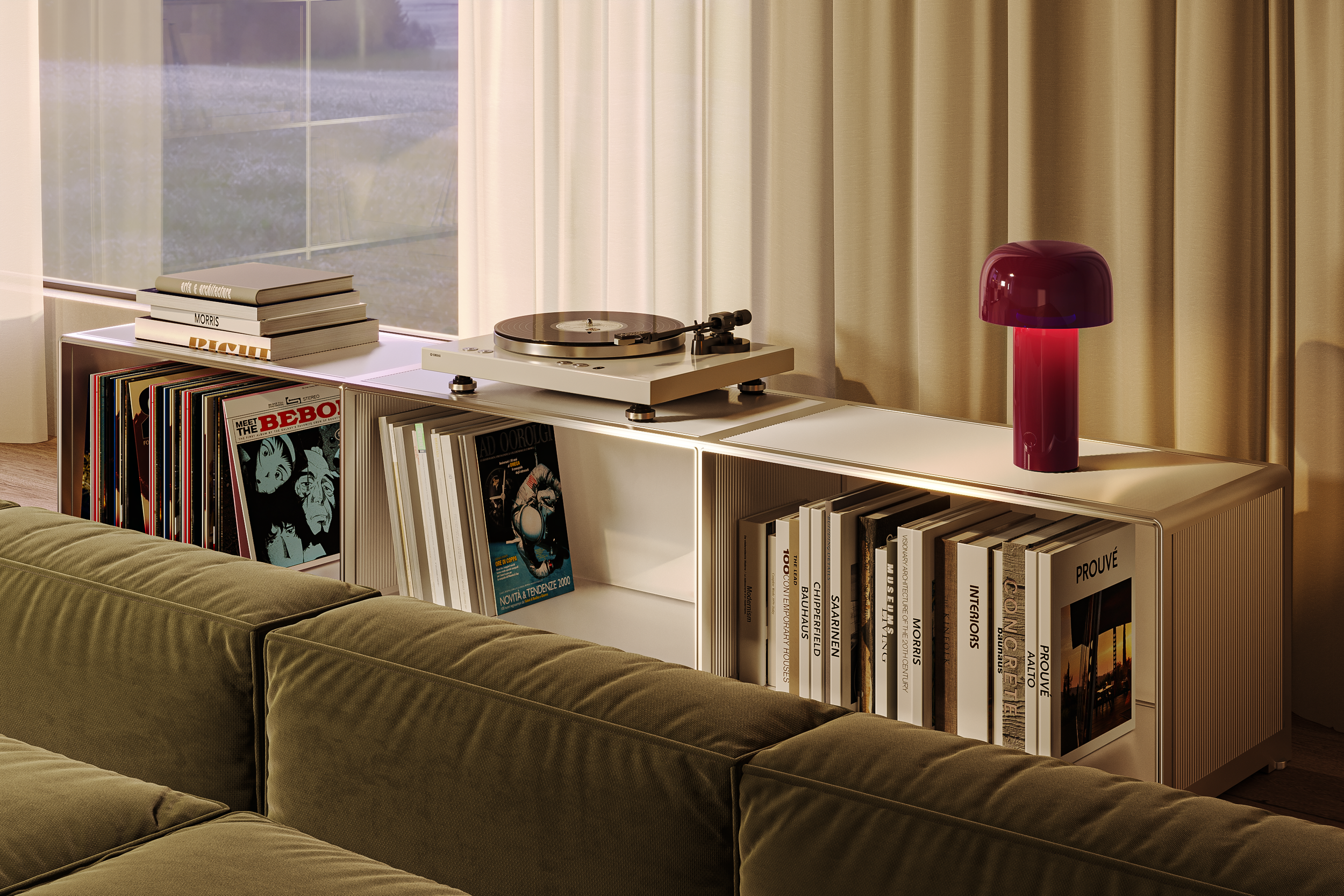
Client / Project Owner: MOD Studio
Founders: Hanna & Berk
Collaboration: Sila & Gökhan
Intro
MOD Studio started with a simple but layered question: how can a modular furniture system feel flexible and practical, without becoming visually generic?
Modular furniture is often built around function: efficiency, adaptability, scalability, and ease of assembly.
But through user and market research, we saw that modularity is not only about flexibility. It is also about how people understand the system, adapt it to their space, and emotionally relate to it over time.
This project explores how joints, profiles, structural details, and material transitions can do more than hold a system together. They can also shape the identity of the product.
Instead of treating structure as something to hide, we looked at how it could become part of the design language.
My Role
This project was developed for MOD Studio, founded by Hanna and Berk.
I was involved in the early stage of the project, leading the initial communication, research, and strategic framing. My focus was to understand the project ambition, user needs, market context, and the opportunity for a modular furniture system with a clear design identity.
I analyzed existing modular systems, mapped structural and visual patterns, and helped define the early design directions.
Gökhan led the detailed design development, manufacturability, and final visualizations, while I continued to contribute through feedback and design reviews to keep the concepts aligned with the initial strategy.
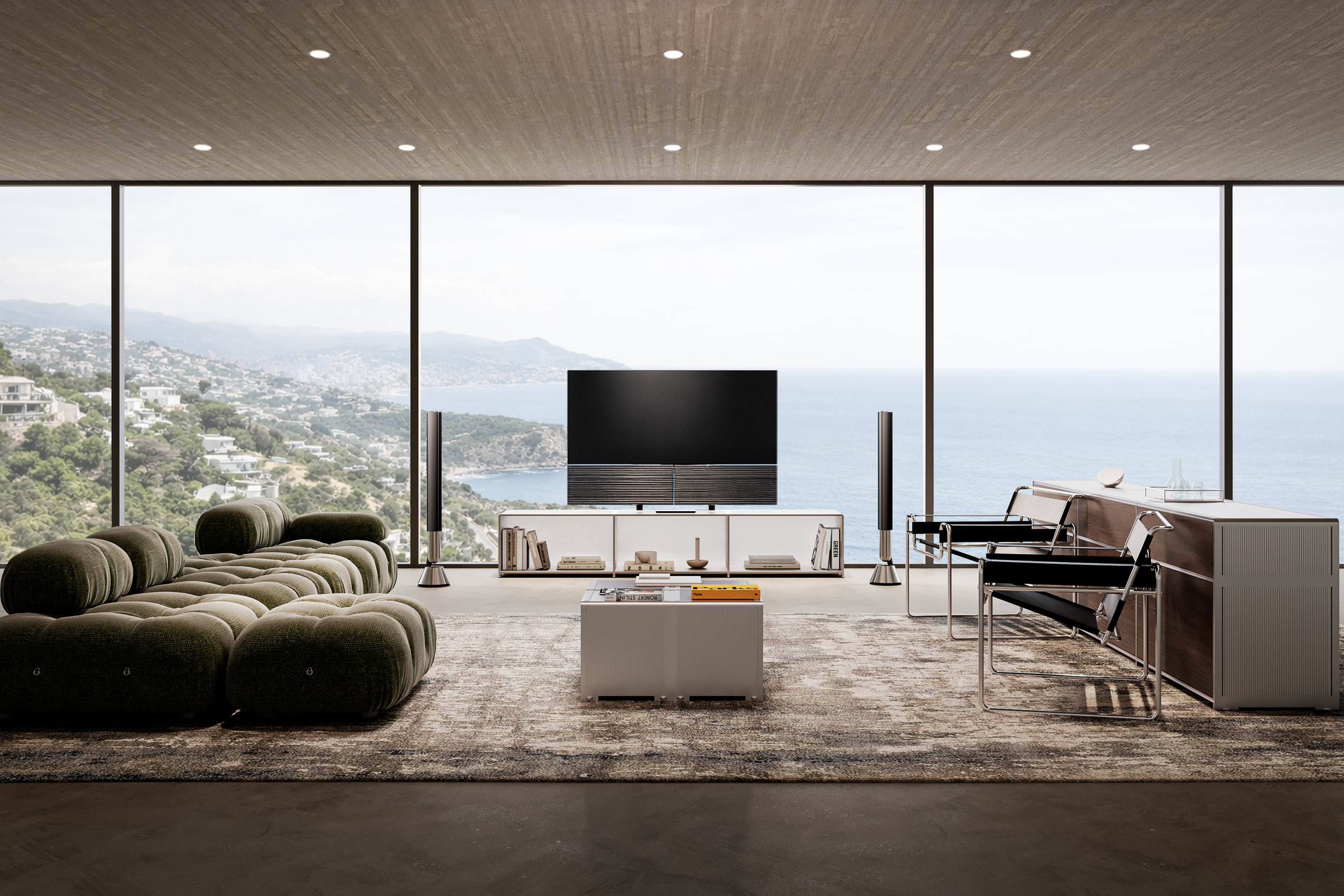
Research & Strategy

Before moving into concepts, I looked at the user, market, material direction, and visual landscape around modular furniture.
The research helped frame the project not only as a furniture design task, but as a system strategy: who the product is for, how it should adapt, what it should communicate, and how its construction could become part of its identity.
The main opportunity was to create a modular system that feels flexible and practical, but not visually generic.
A. Target Research
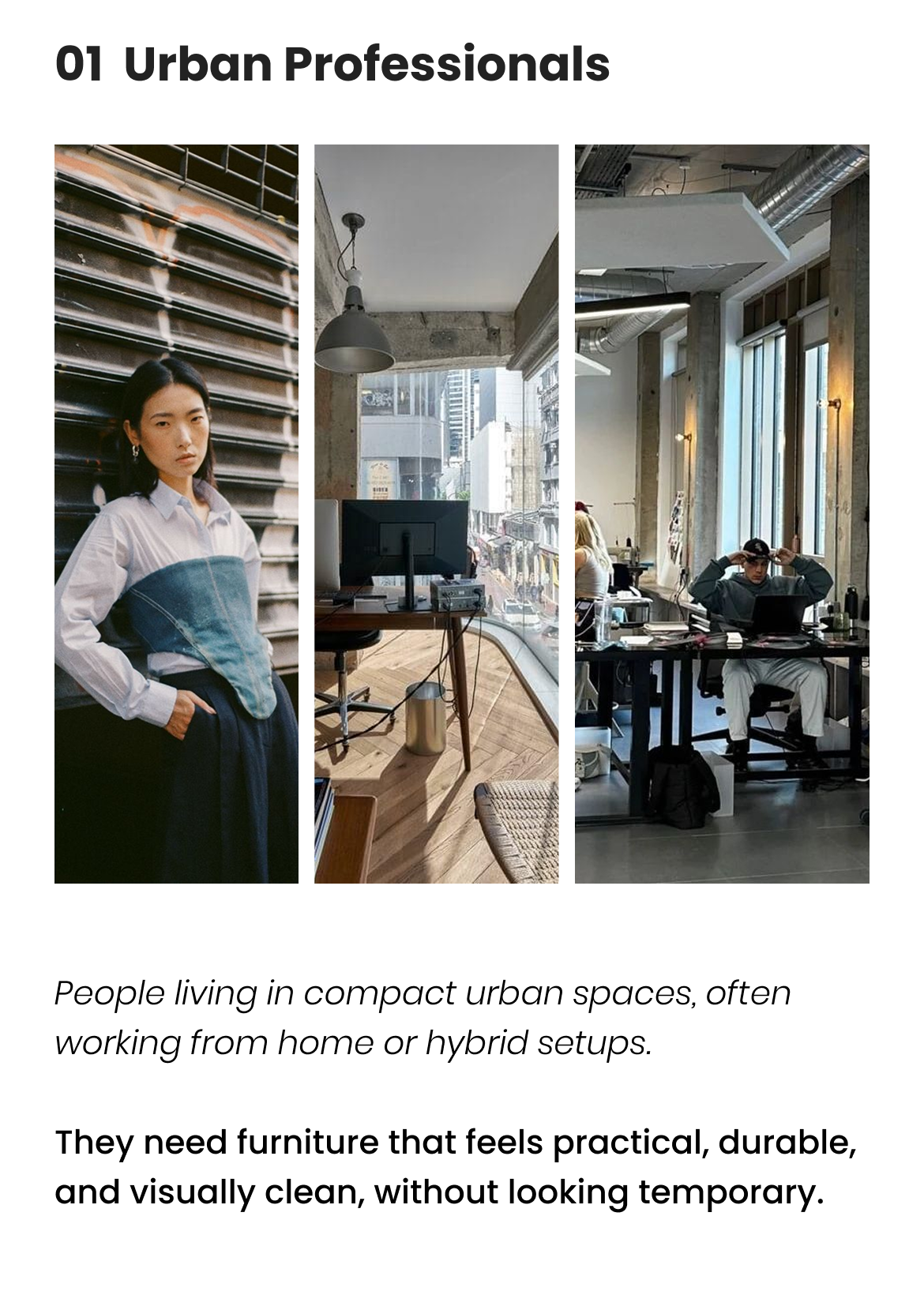
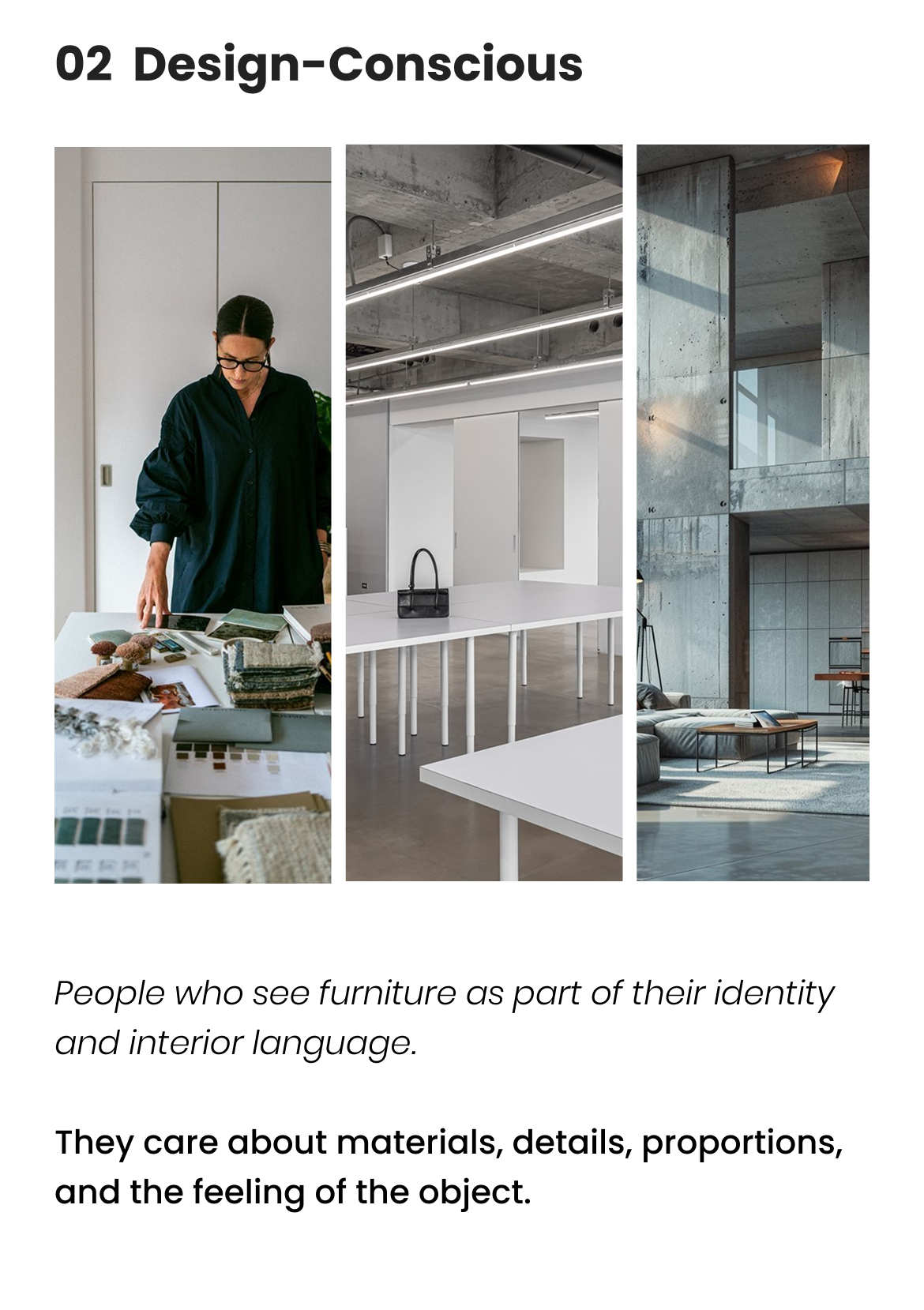
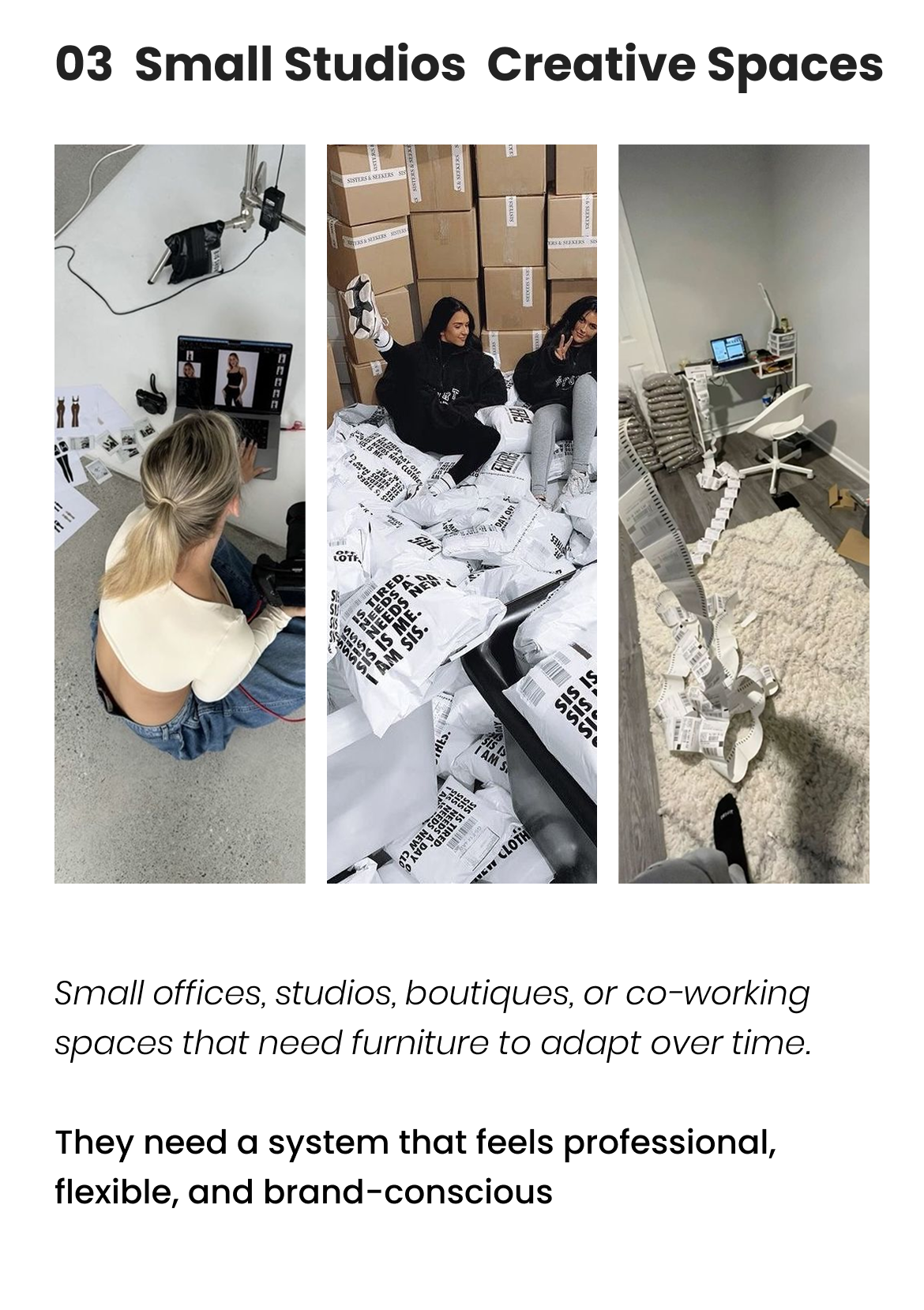
Shared Needs
Across these user groups, the same expectations started to repeat. The system needed to adapt to changing spaces and different ways of living, but it also had to feel stable enough for long-term use.
Flexibility alone was not enough; the product still needed a clear visual identity, easy assembly, and a material quality that felt intentional rather than temporary.
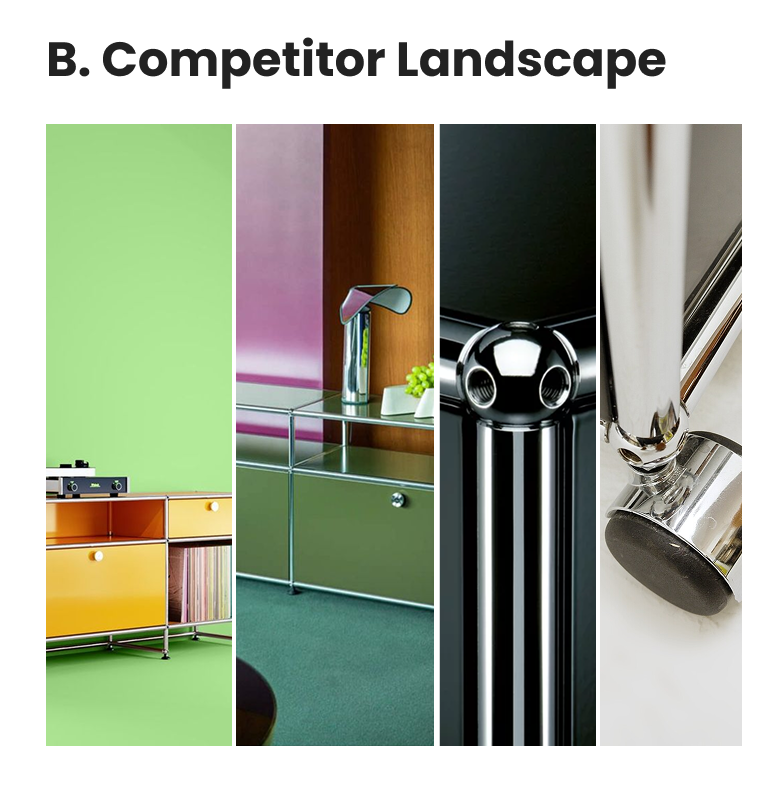
B. Competitor Landscape
The competitor analysis showed that modular furniture systems often sit between two poles: technical precision and domestic warmth.
Brands like USM Haller and Vitsoe use structure, joints, and profiles as part of their identity. Wood-based systems like Tylko, KIYO, and Montana Modular feel warmer and more approachable, but often have a less expressive construction logic.
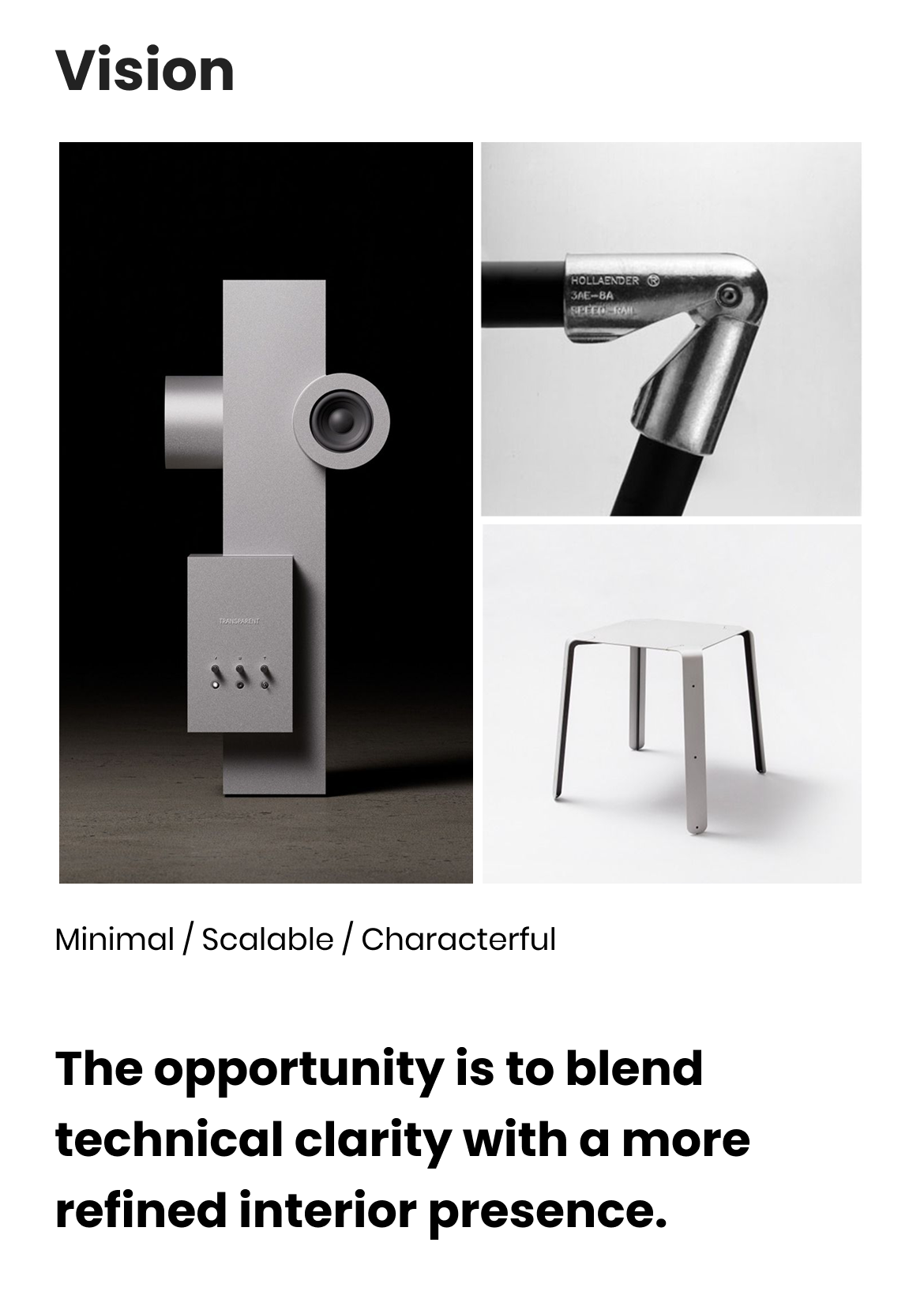
The main opportunity was to explore a system that could balance both sides: clear structure, modular flexibility, and a more characterful product language.
For MOD Studio, this meant treating joints, profiles, and material transitions not only as technical details, but as part of how the system communicates.

Mapping modular furniture systems through material, connection logic, flexibility, and product identity.
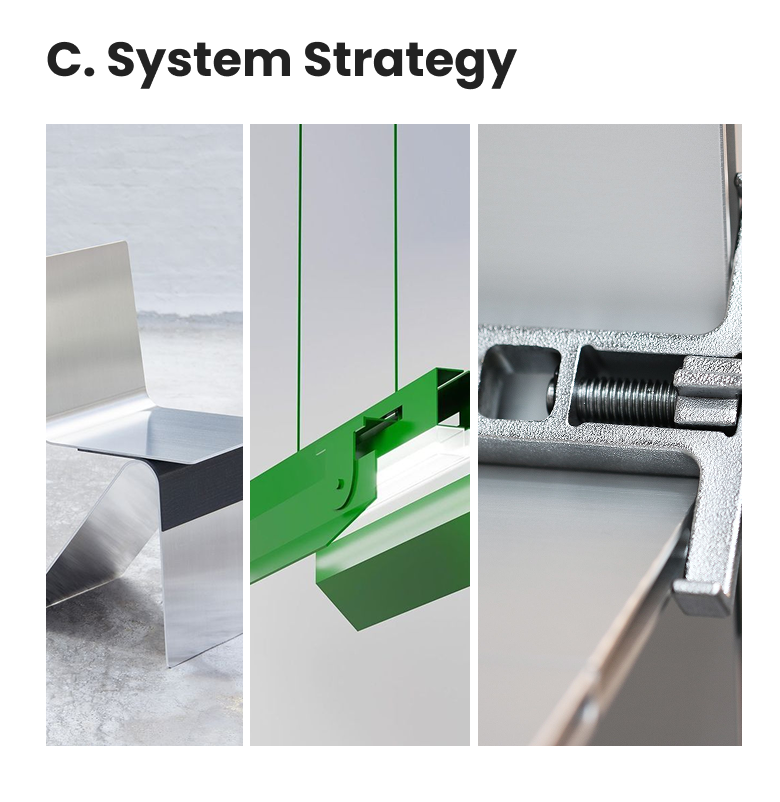
C. Material & System Strategy
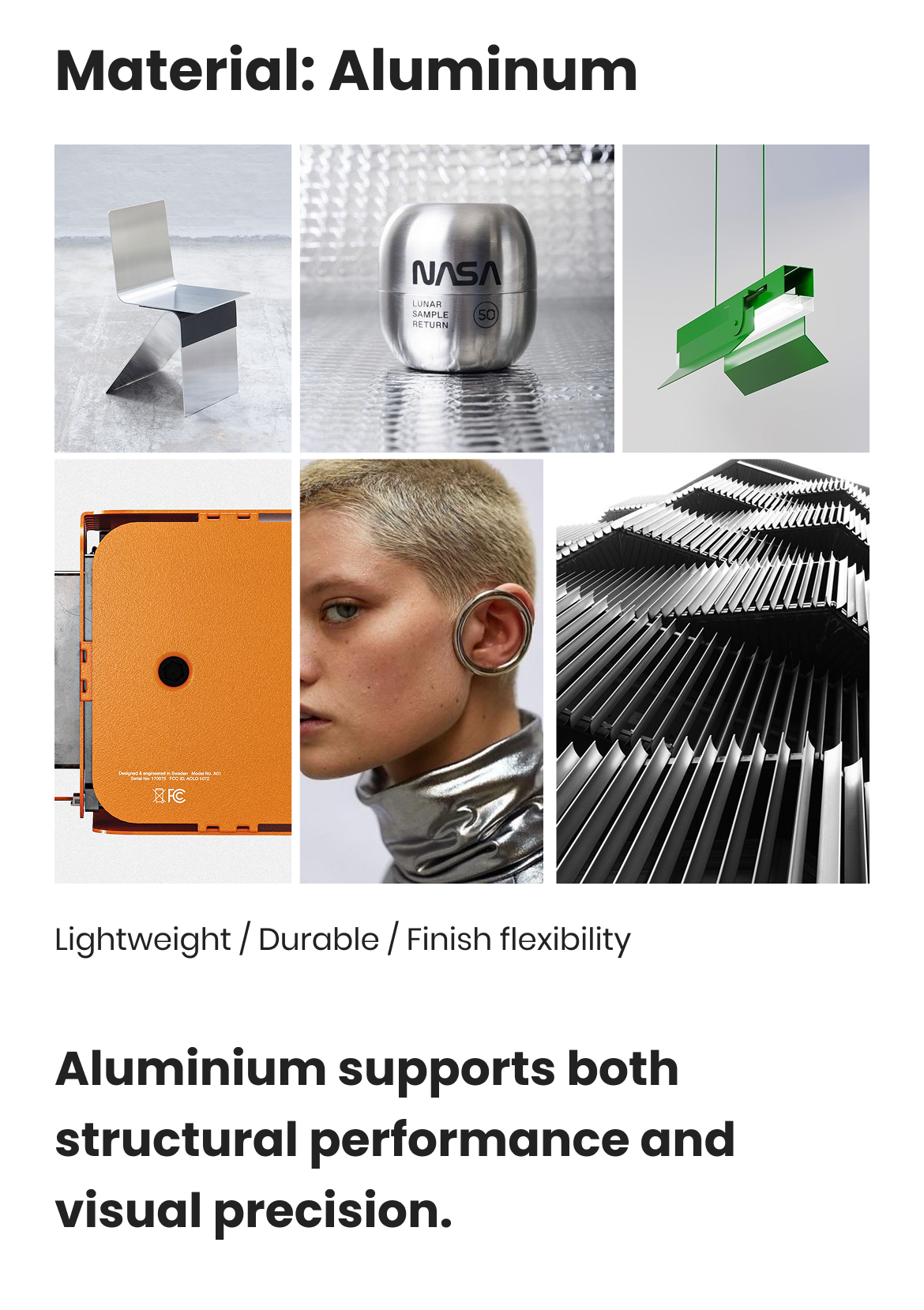
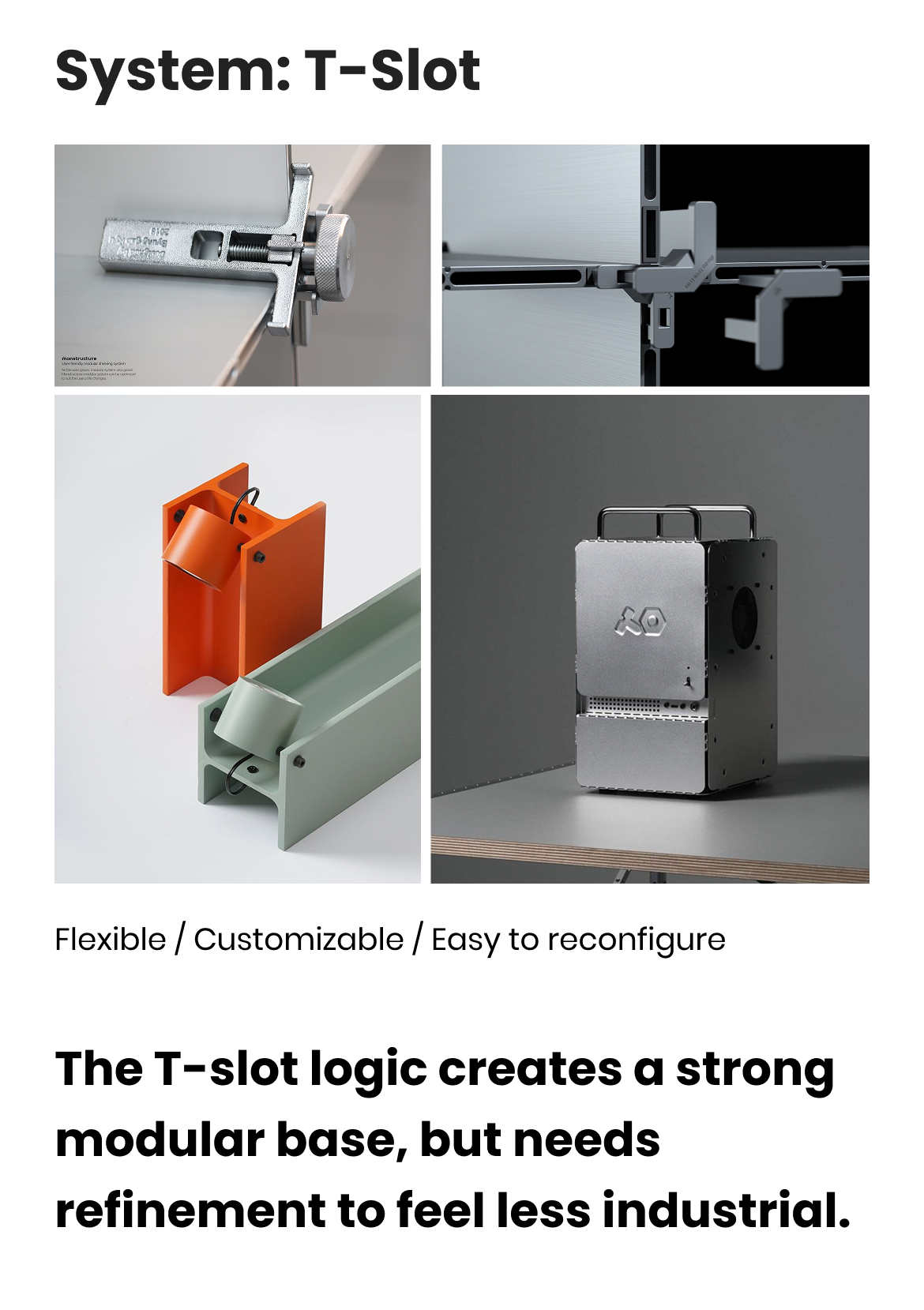
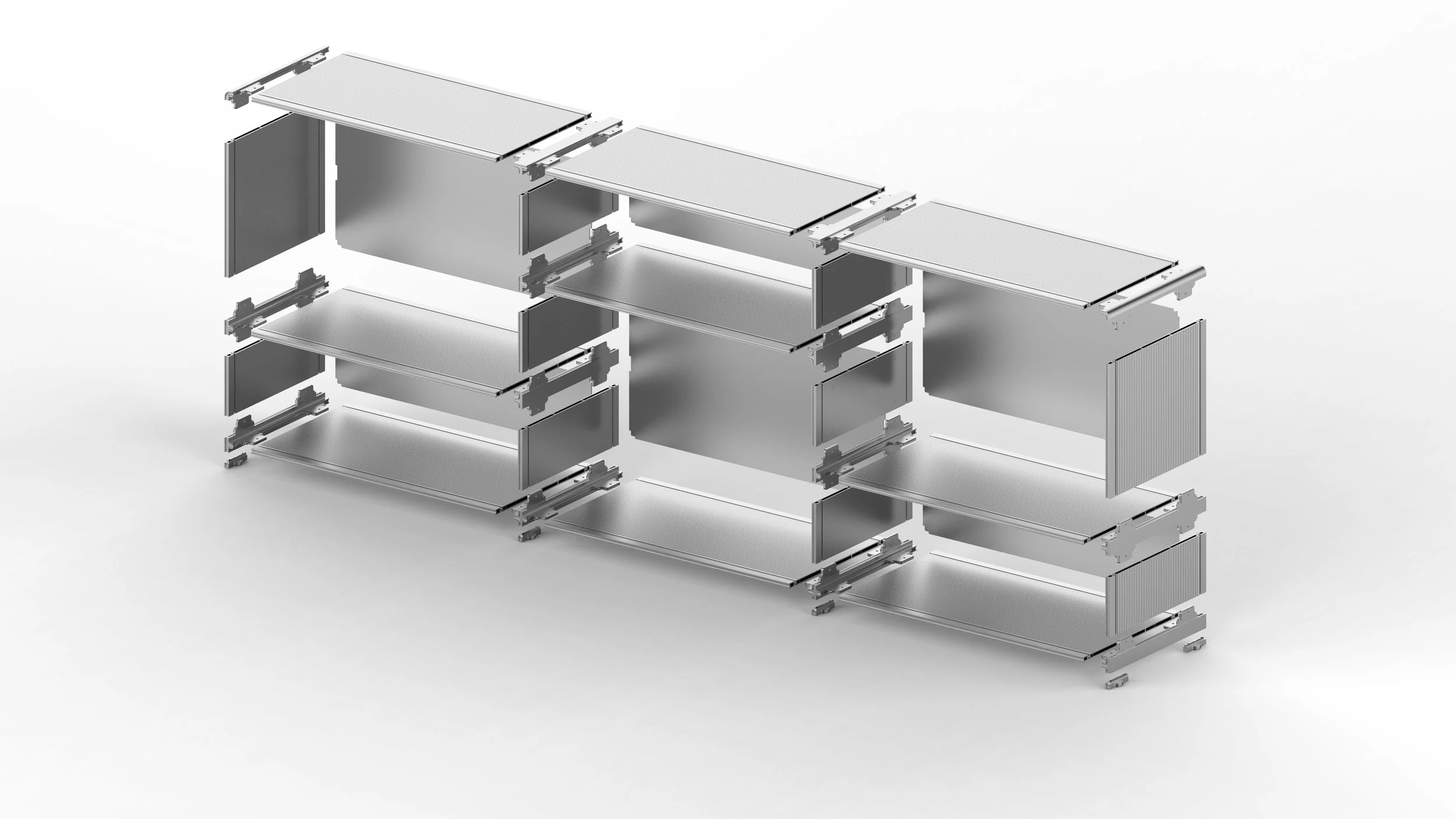
The research pointed toward aluminium and T-slot construction as a strong base for the system. Aluminium offered durability, lightness, and finish flexibility, while the T-slot logic supported modularity, customization, and future add-ons.
The main design challenge was to keep the system flexible and precise, without making it feel too industrial or cold.
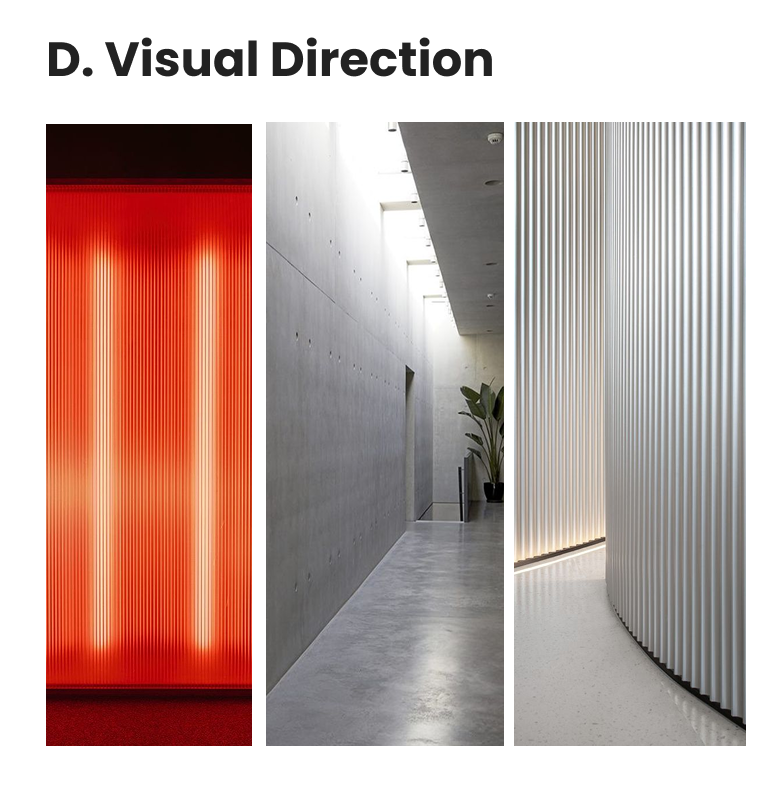
D. Visual & Lifestyle Direction
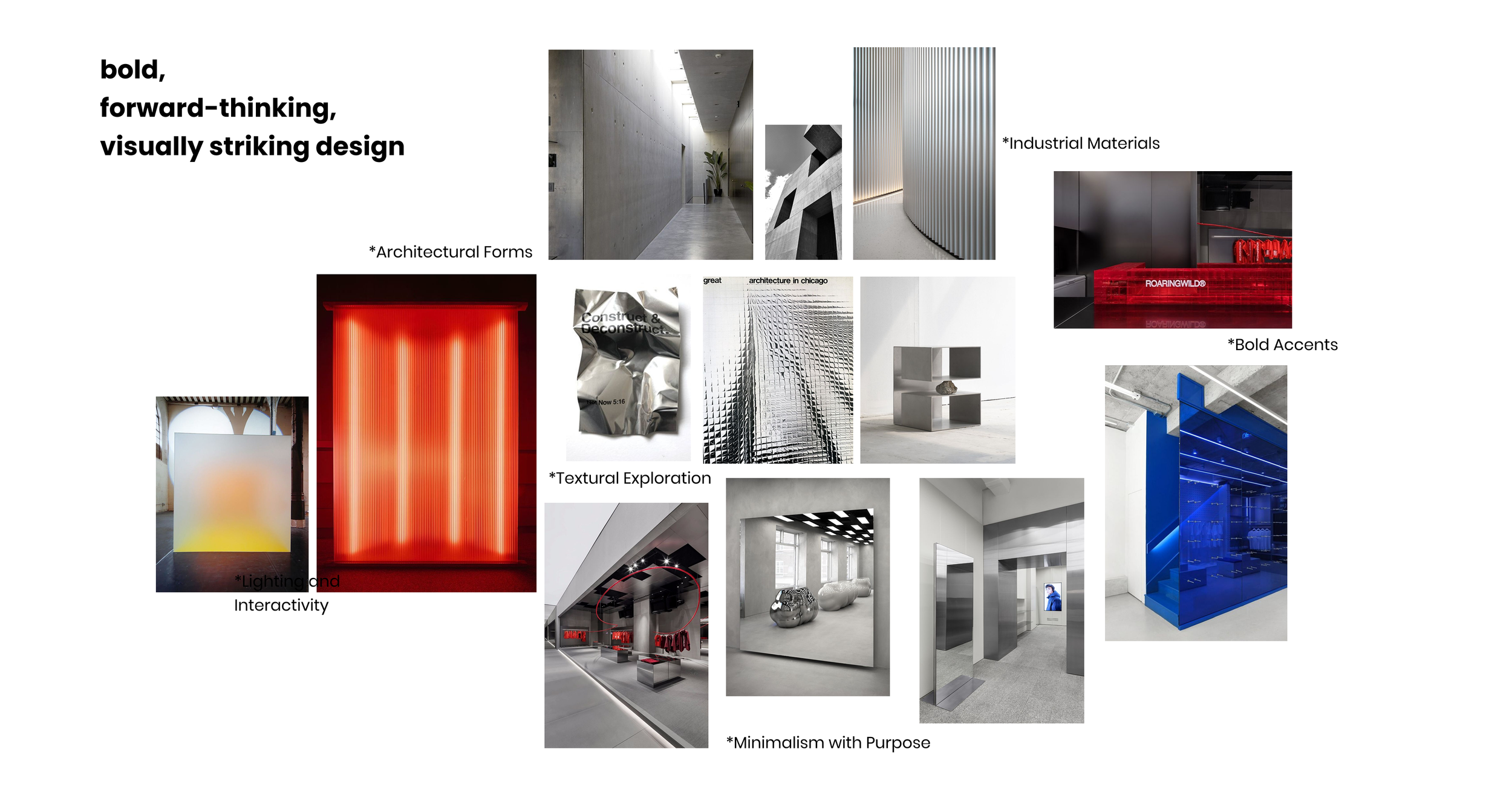
The visual research pointed toward a direction that felt bold, architectural, and material-driven, but still suitable for contemporary living and working spaces.
The aim was not to make the system feel decorative. It needed to feel clear, structured, and intentional.
Concept Direction
Using the research insights and early design principles, we explored three different concept directions for the modular system. Each concept tested a different relationship between assembly logic, visual clarity, and manufacturability.
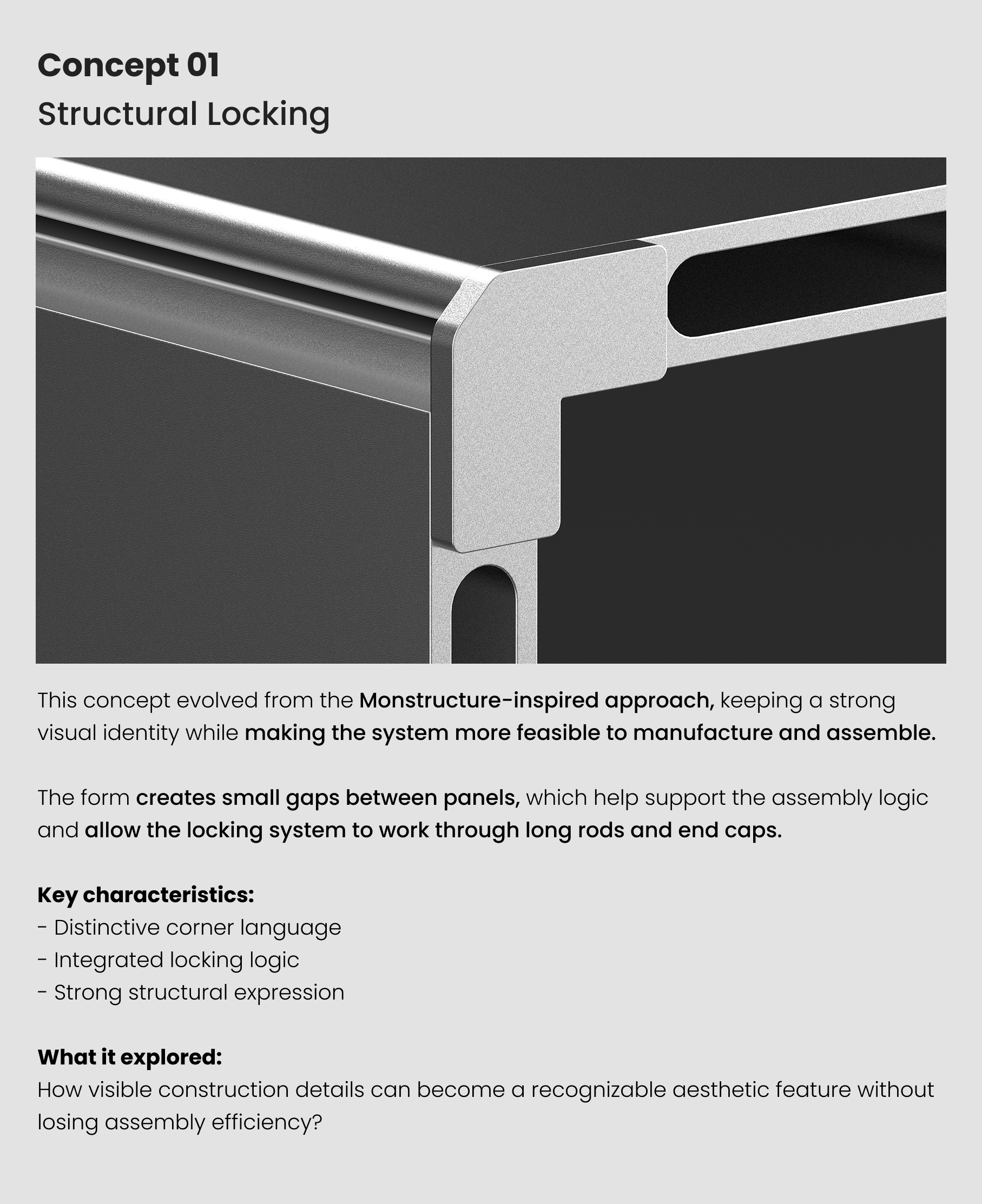
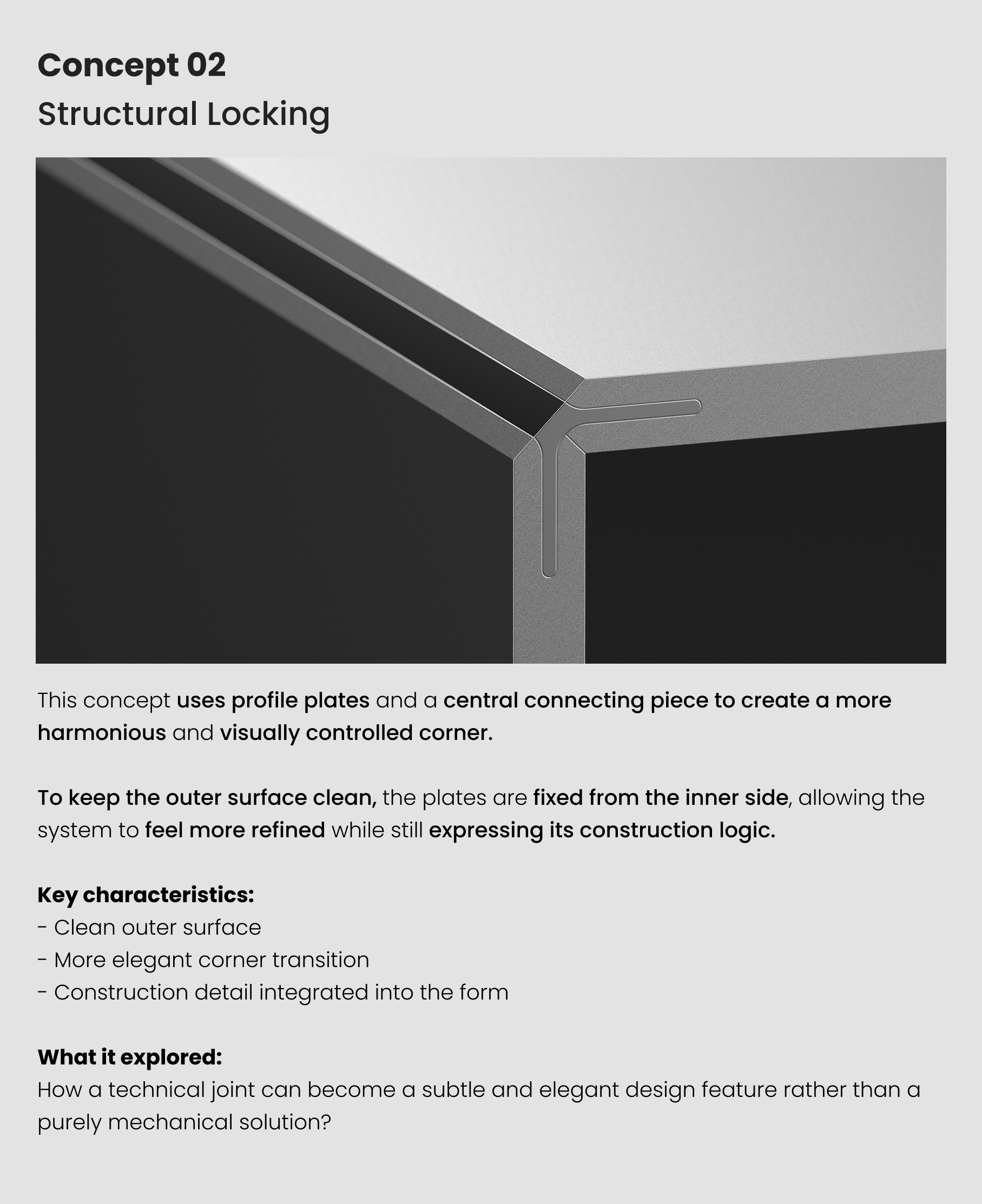
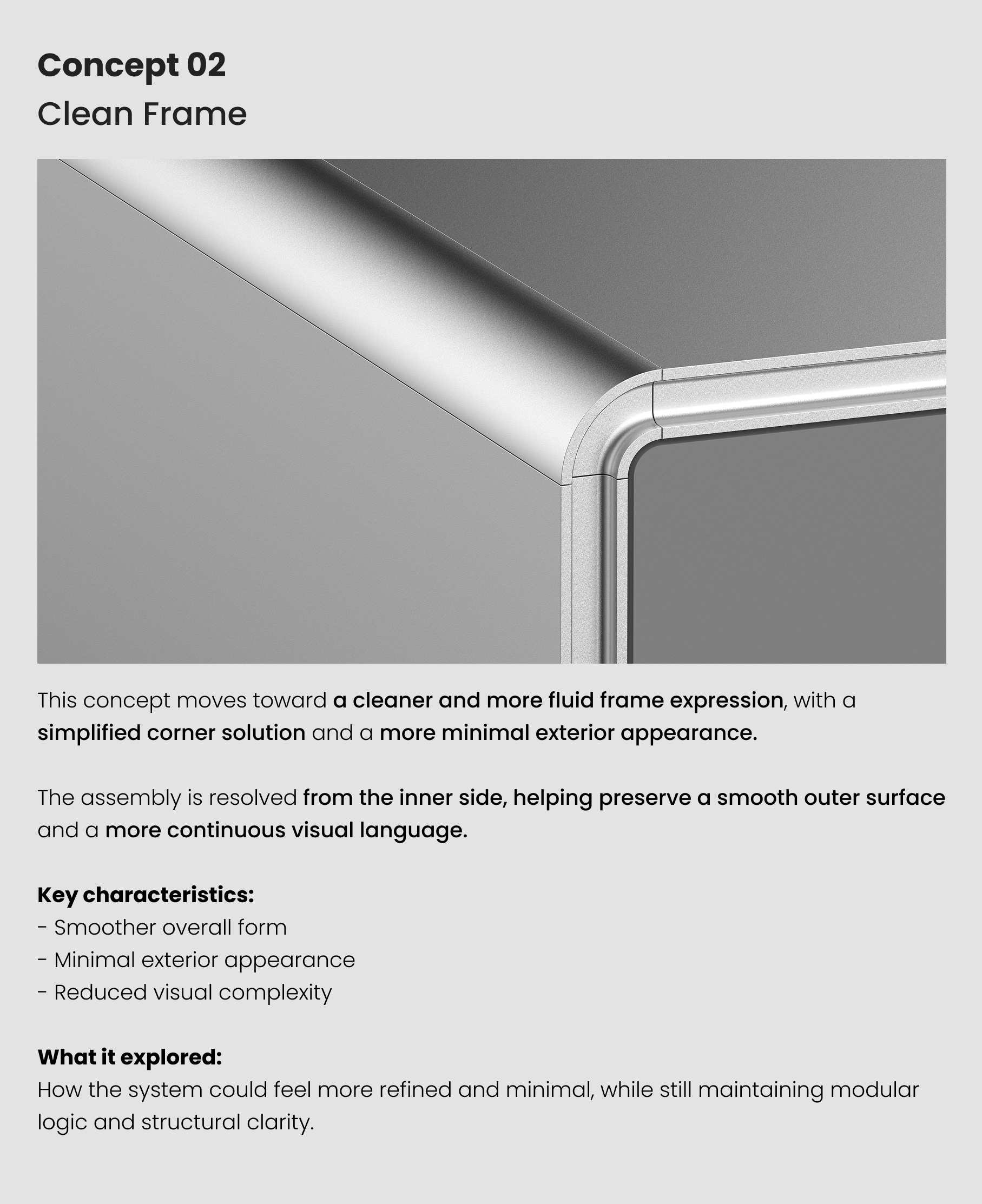
All three concepts were explored in a draft design stage to evaluate their technical feasibility, manufacturing potential, and aesthetic quality.
Rather than selecting a direction based on form alone, the aim was to understand which approach could create the best balance between identity, assembly logic, and production viability.
Outcome
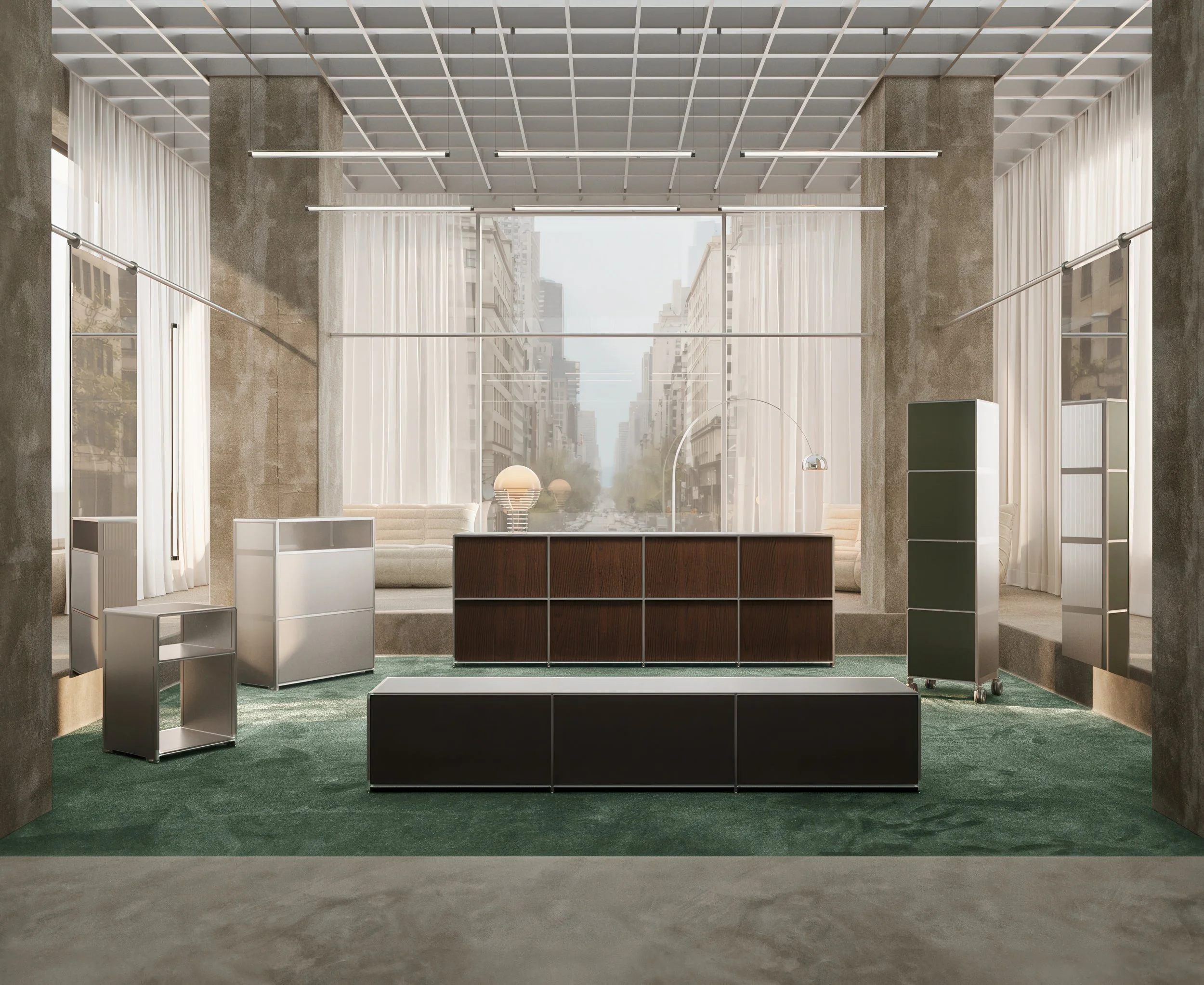
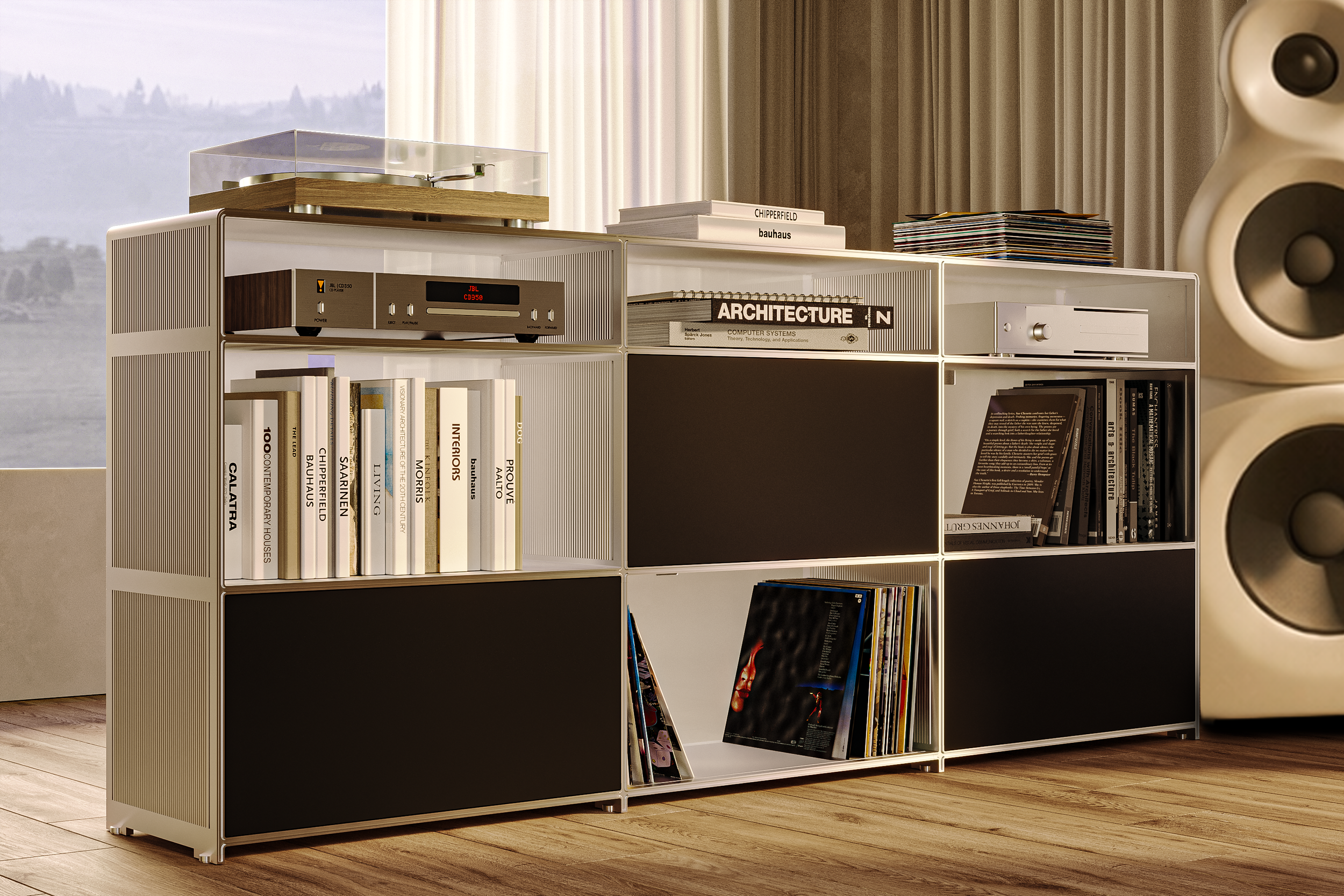
The project resulted in a set of strategic concept directions for MOD Studio’s modular furniture system.
Each direction explored a different way of balancing structure, assembly logic, manufacturability, and product identity.
Rather than treating modularity as a purely functional feature, the project framed it as part of the system’s visual language. The outcome shows how joints, profiles, corners, and material transitions can define not only how the product is built, but also how it is recognized.
The final directions created a foundation for a system that could feel flexible, precise, and characterful, while still being suitable for contemporary living and working spaces.
Reflection
This project was a good reminder that modular furniture is not only about flexibility.
A system can be easy to assemble, reconfigure, and manufacture — but still needs a clear reason to be remembered.
For me, the most valuable part of the project was using research to define direction before form. By looking at users, competitors, materials, and construction logic, we could turn technical decisions into design principles.
Details like joints, corners, profiles, and material finishes are never just technical choices.
They are part of how a product communicates.