
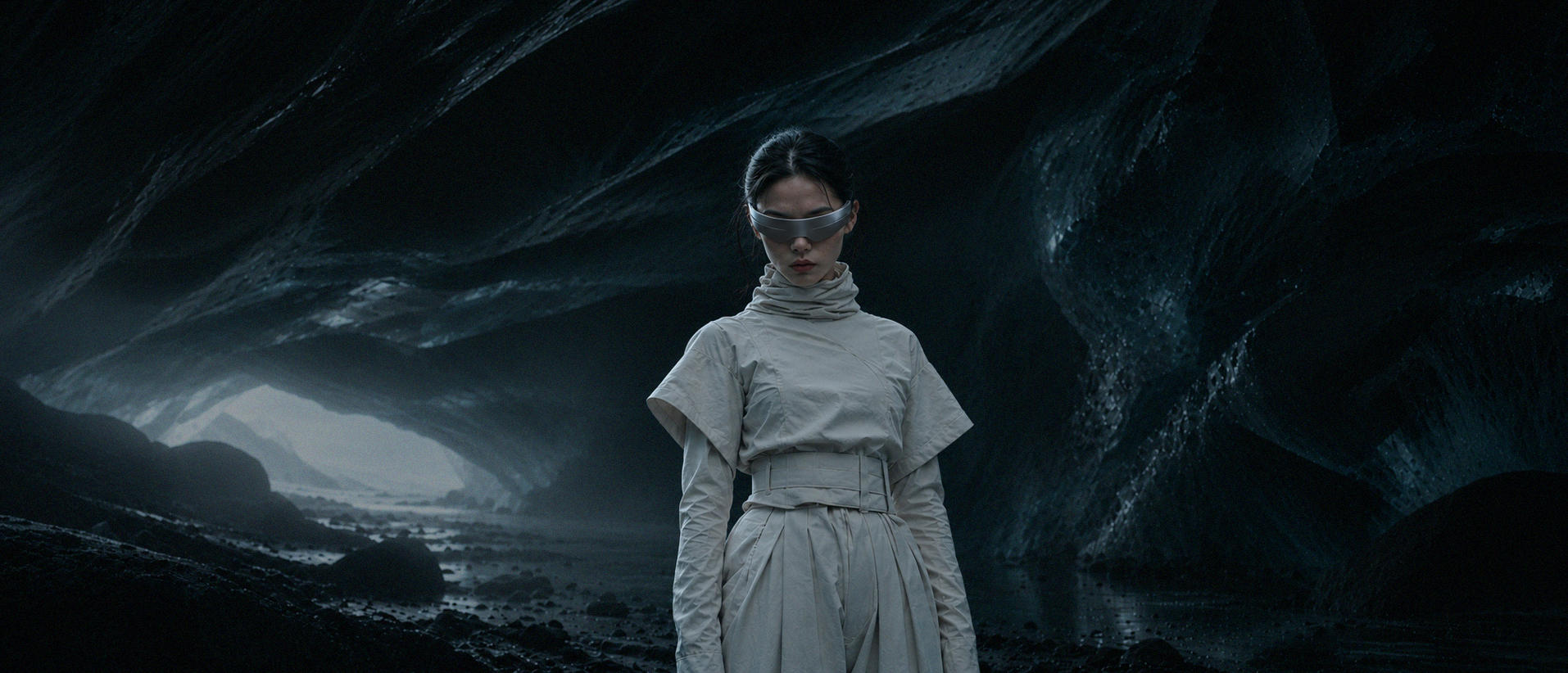
Project Owner: Self-initiated project
Project Type: Lensless eyewear concept
Focus: Industrial Design / Prototyping / AI-Assisted Creative Direction
Year: 2026
Credits
Sila Tulay Zeytin / Industrial Design & Creative Direction
Kirill Antonov / 3D Printing
Mutlu Bozkurt / Prototype Fit Model
Intro
GLAZ001 started with a detail I kept coming back to in traditional Inuit snow goggles: the narrow opening. I wanted to see how much of a lensless eyewear design I could build around that one detail.
I sketched different ways to open up the front and wrap the body around the face. I used AI-assisted surface studies to see how different finishes changed the way the same sketch read. Then I modelled two versions in Rhino, one with a slit and one with perforations. Seeing the 3D prints on a face gave me a better sense of scale and showed me where to refine the fit.
I took the final slit design into Both Worlds, a campaign set in an open Arctic landscape and a dark ice cave. With AI, I could develop the two environments and explore how framing and light changed the way the goggles appeared. When the goggles came out too big in one shot, I went back to the Rhino model and used it as a reference to rework the image.
My Contributions
- Researched traditional snow goggles and developed the concept through original sketches.
- Explored finishes and reflections through AI-assisted studies based on my sketches.
- Modelled the slit and perforation variants in Rhino and refined the fit after reviewing the 3D-printed prototypes.
- Defined the environments, lighting, styling and framing for Both Worlds.
- Developed the AI-assisted campaign imagery and used the Rhino model to guide corrections to the eyewear proportions.
Less Light. Clearer Sight. Research
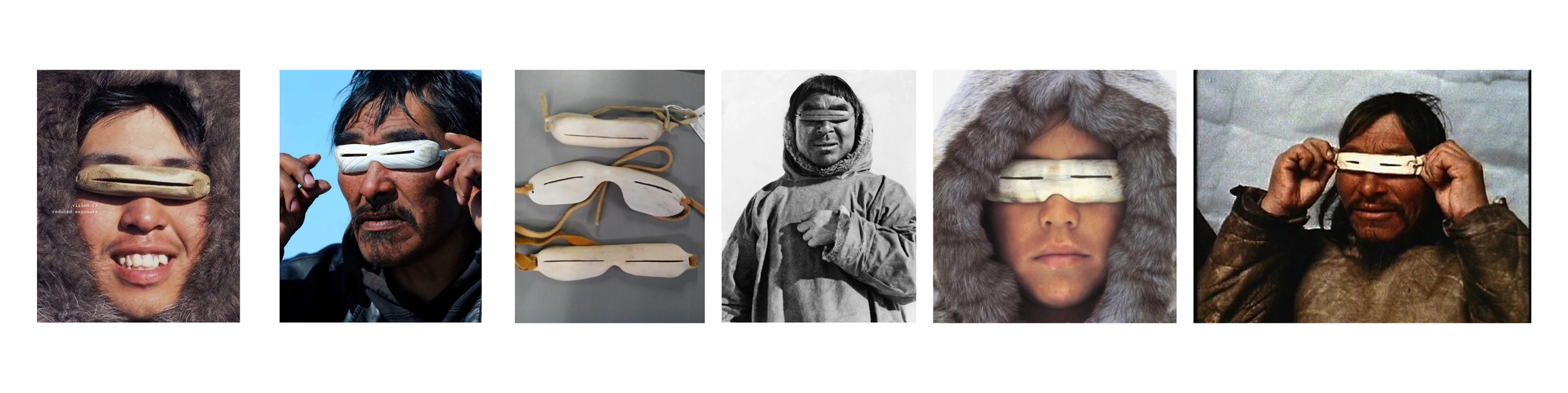
No lenses, just less light.
Inuit and Yupik peoples made snow goggles with narrow slits to cut the glare from sunlight reflecting off snow and ice. Looking through a slit limits how much light reaches the eyes while leaving an opening to see through.
A. Target Research
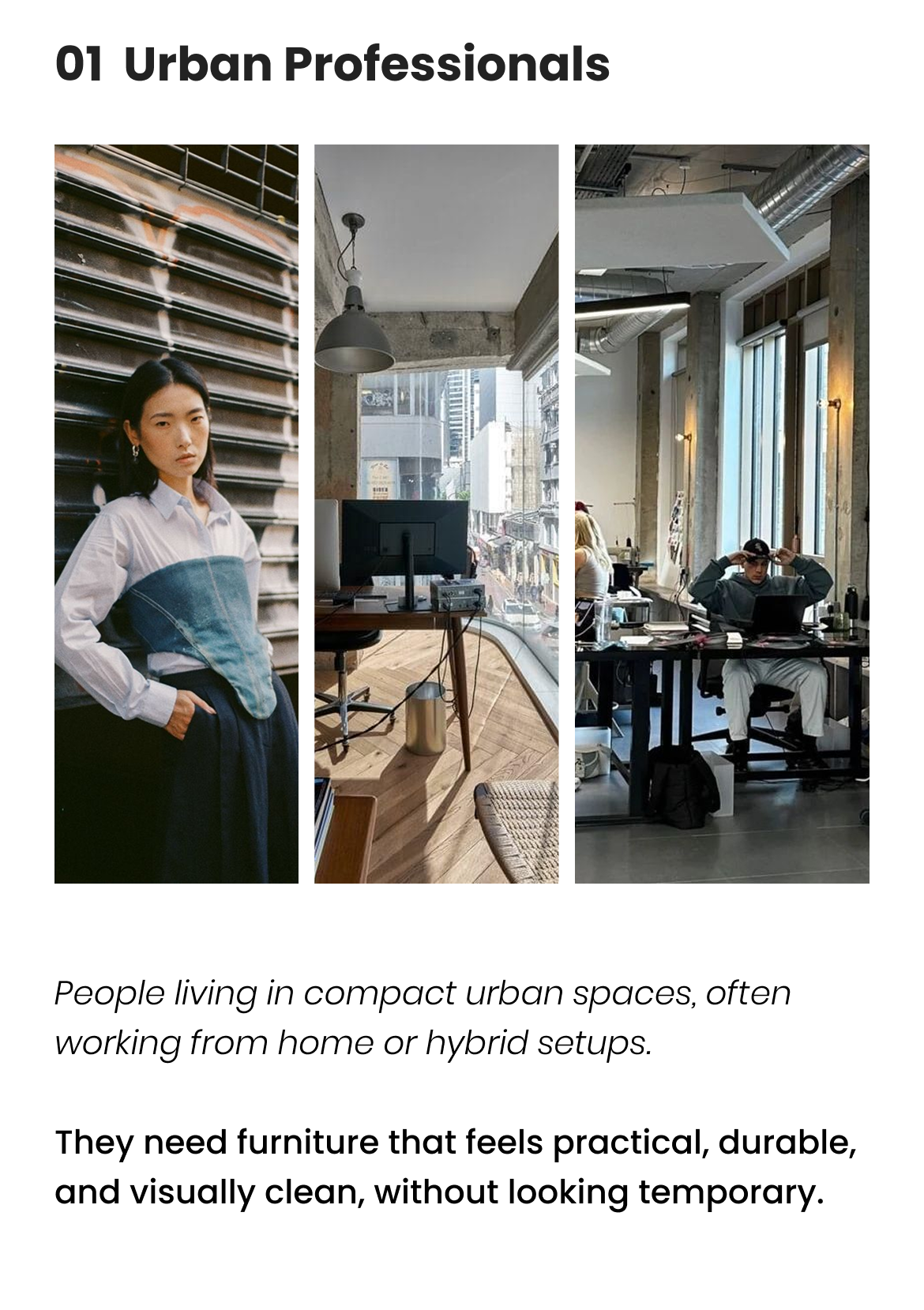
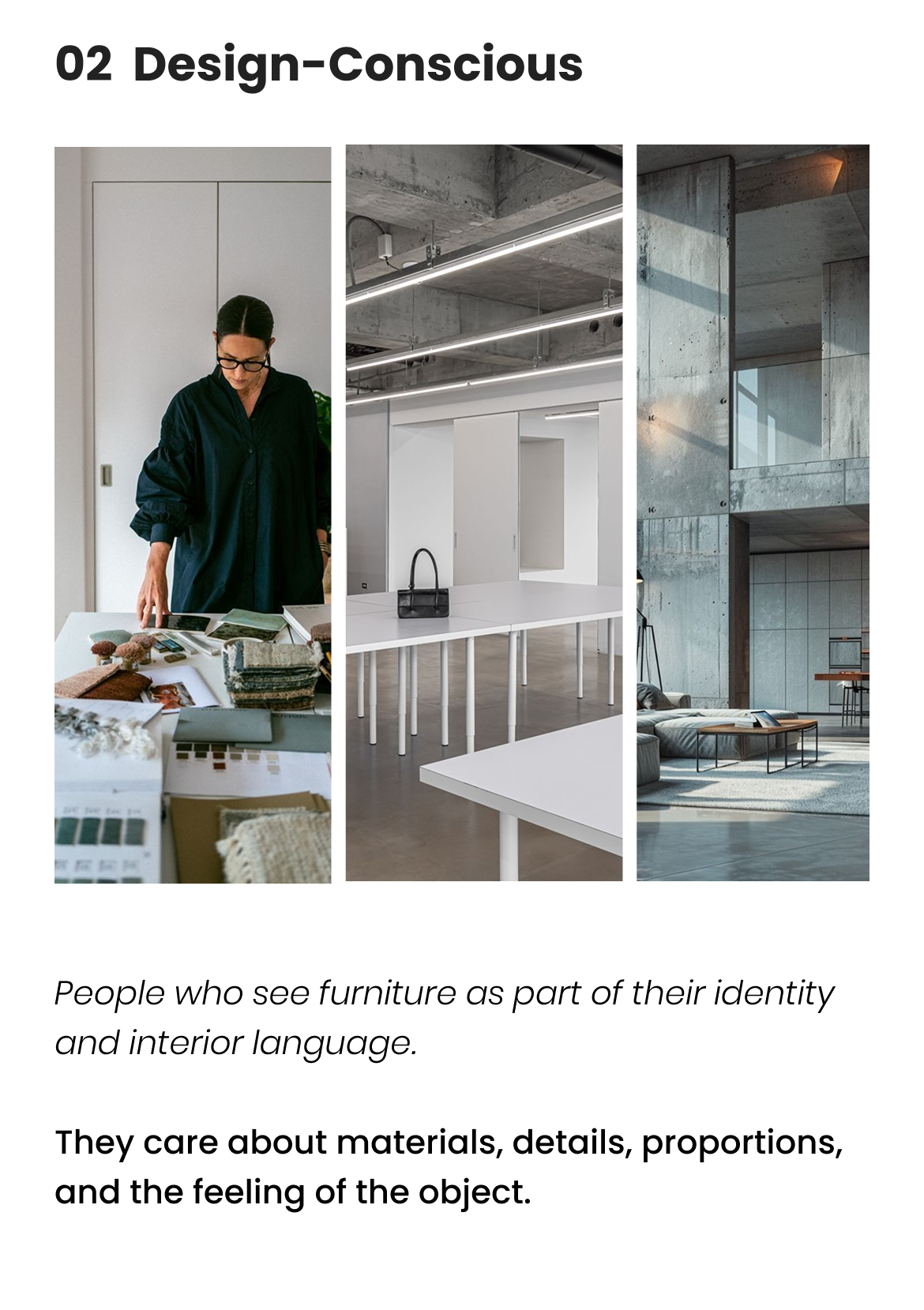
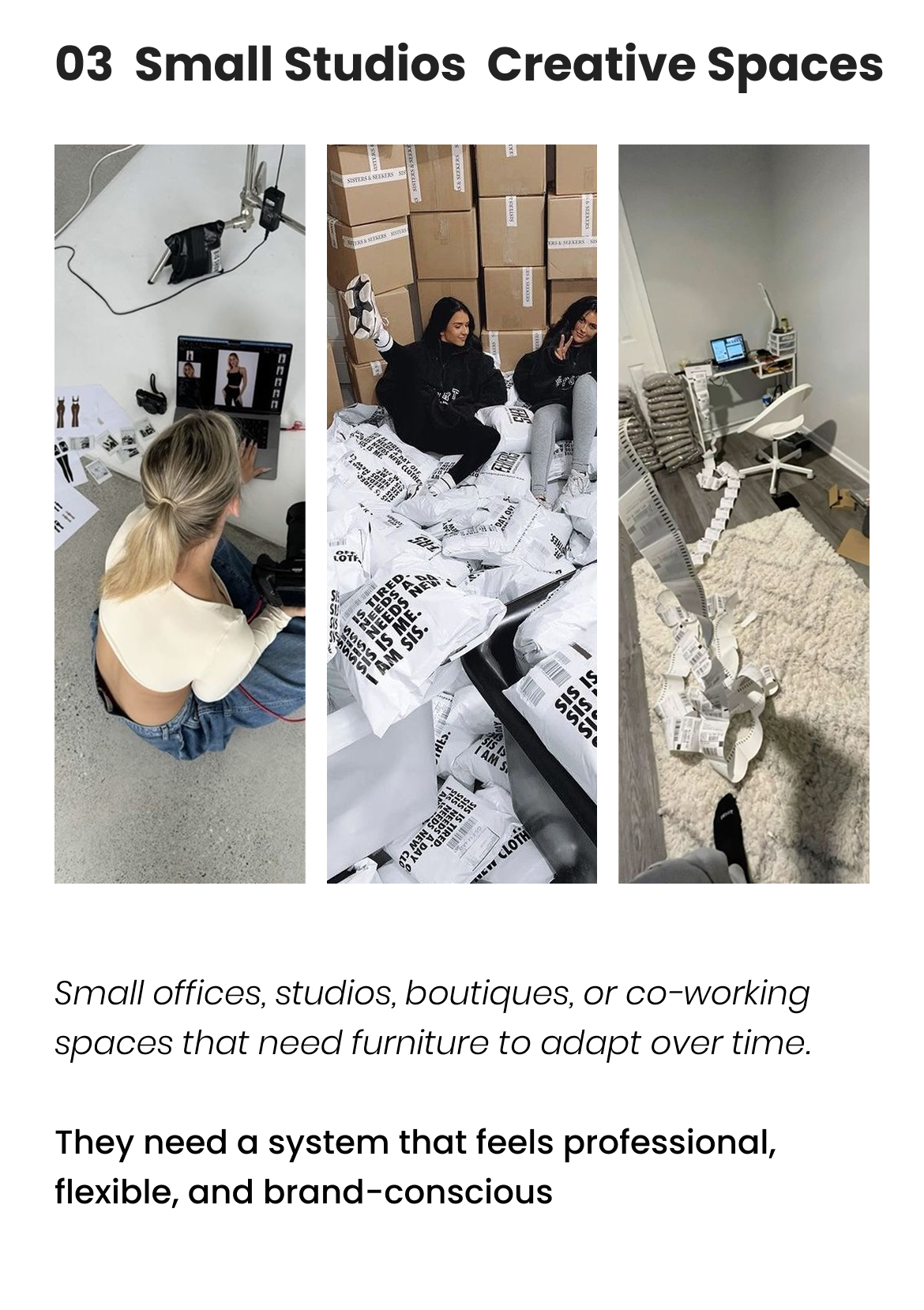
Shared Needs
Across these user groups, the same expectations started to repeat. The system needed to adapt to changing spaces and different ways of living, but it also had to feel stable enough for long-term use.
Flexibility alone was not enough; the product still needed a clear visual identity, easy assembly, and a material quality that felt intentional rather than temporary.
B. Competitor Landscape
The competitor analysis showed that modular furniture systems often sit between two poles: technical precision and domestic warmth.
Brands like USM Haller and Vitsoe use structure, joints, and profiles as part of their identity. Wood-based systems like Tylko, KIYO, and Montana Modular feel warmer and more approachable, but often have a less expressive construction logic.
The main opportunity was to explore a system that could balance both sides: clear structure, modular flexibility, and a more characterful product language.
For MOD Studio, this meant treating joints, profiles, and material transitions not only as technical details, but as part of how the system communicates.

Mapping modular furniture systems through material, connection logic, flexibility, and product identity.
C. Material & System Strategy
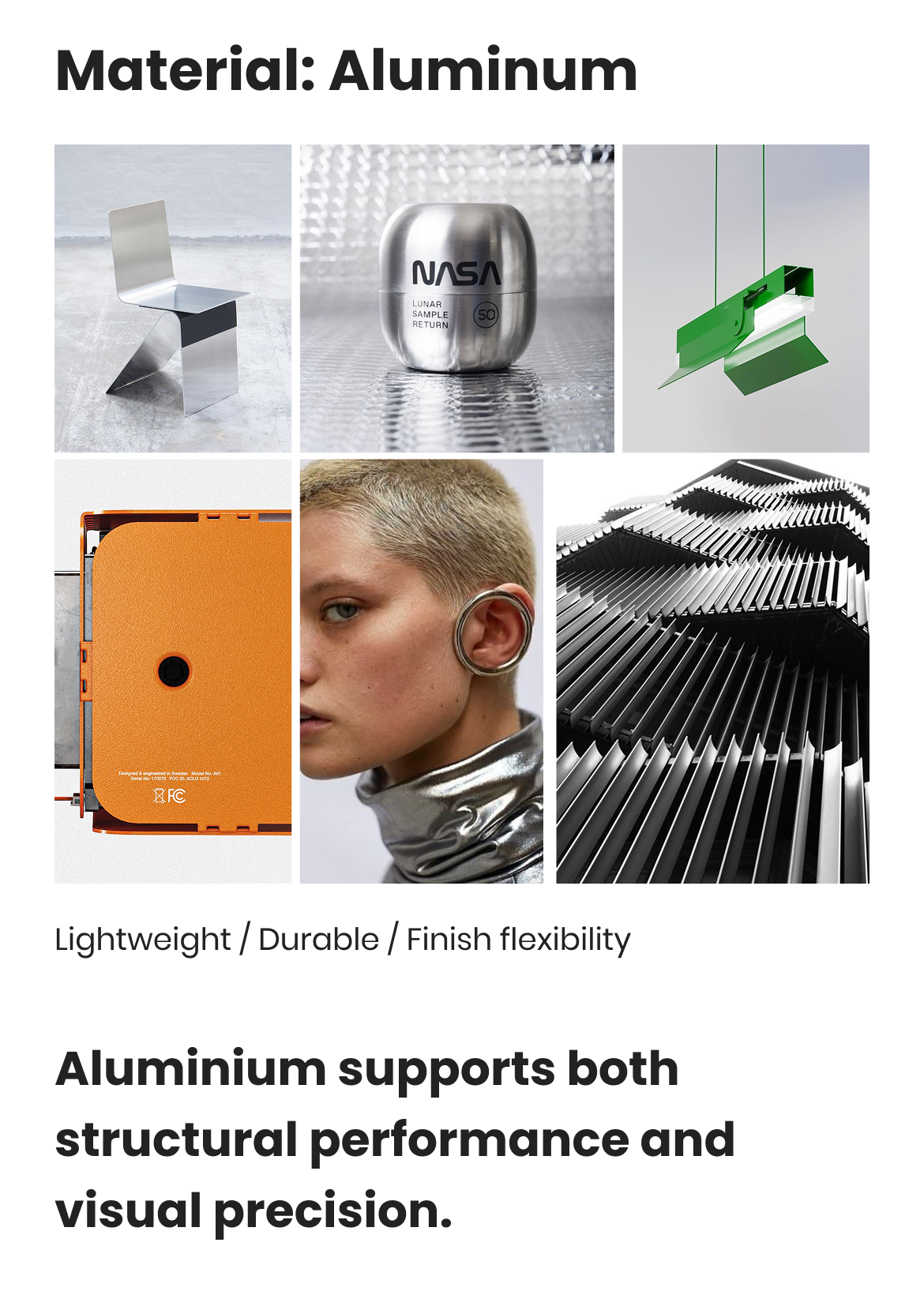
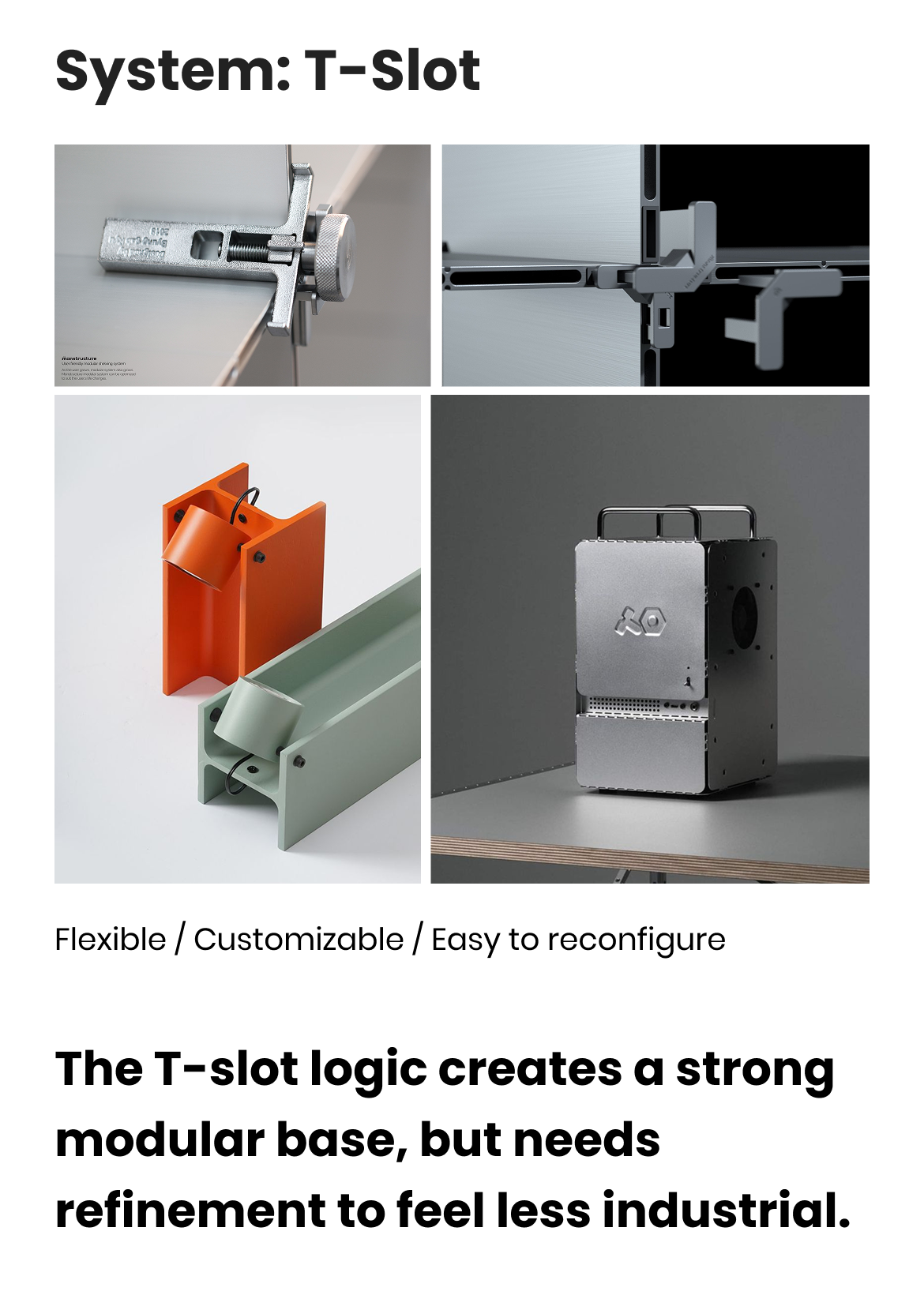
The research pointed toward aluminium and T-slot construction as a strong base for the system. Aluminium offered durability, lightness, and finish flexibility, while the T-slot logic supported modularity, customization, and future add-ons.
The main design challenge was to keep the system flexible and precise, without making it feel too industrial or cold.
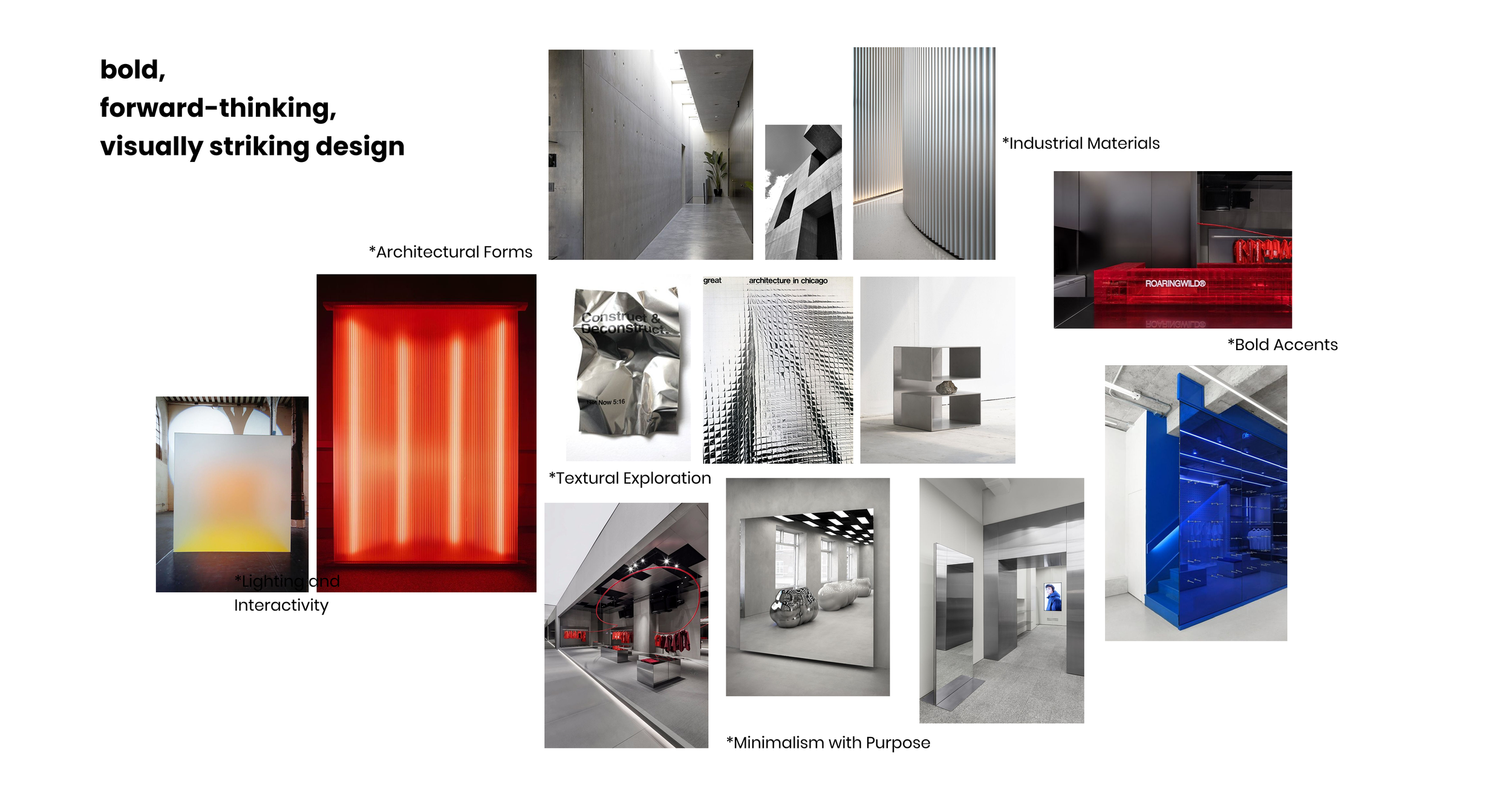
D. Visual & Lifestyle Direction
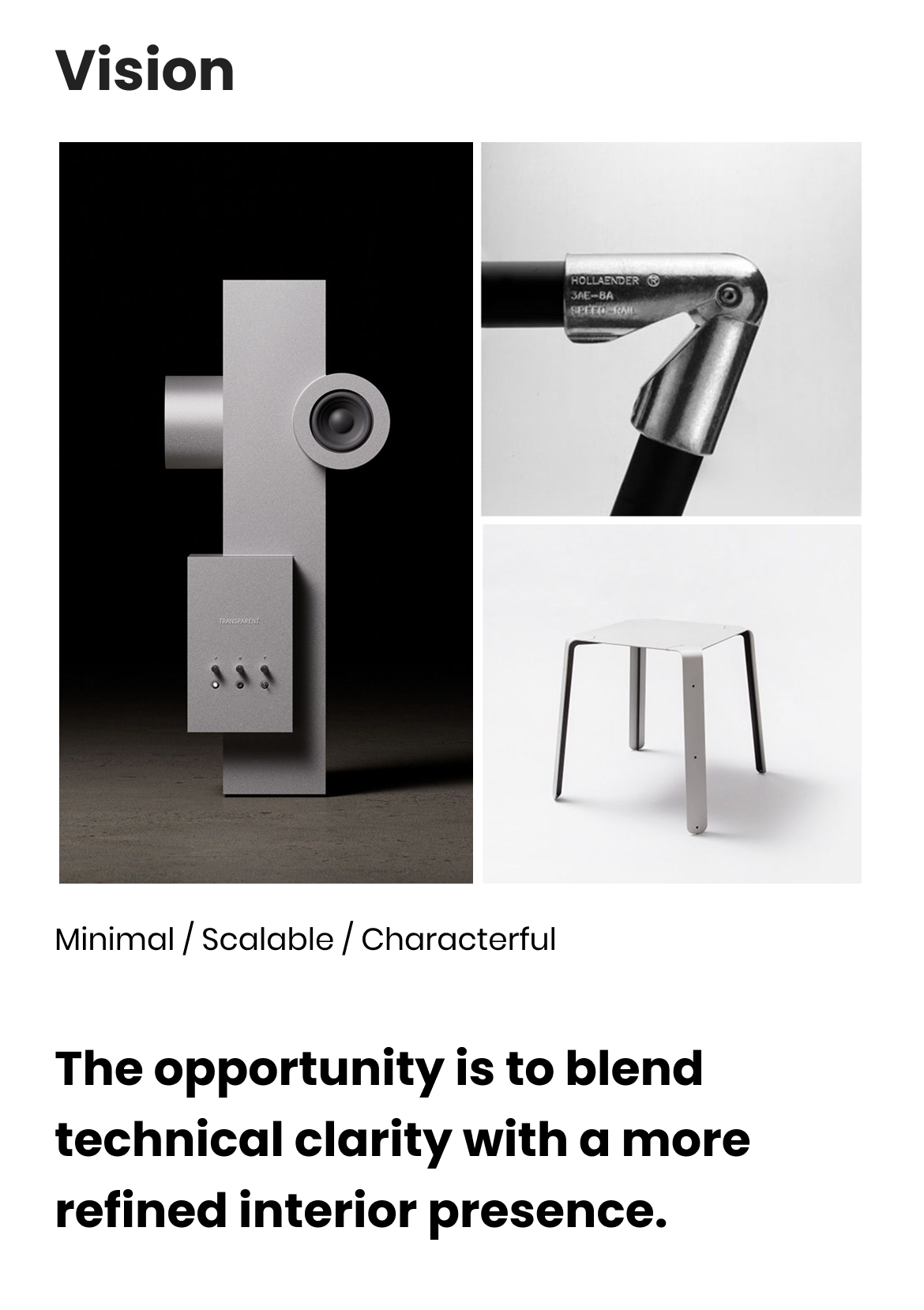
The visual research pointed toward a direction that felt bold, architectural, and material-driven, but still suitable for contemporary living and working spaces.
The aim was not to make the system feel decorative. It needed to feel clear, structured, and intentional.
Concept Direction
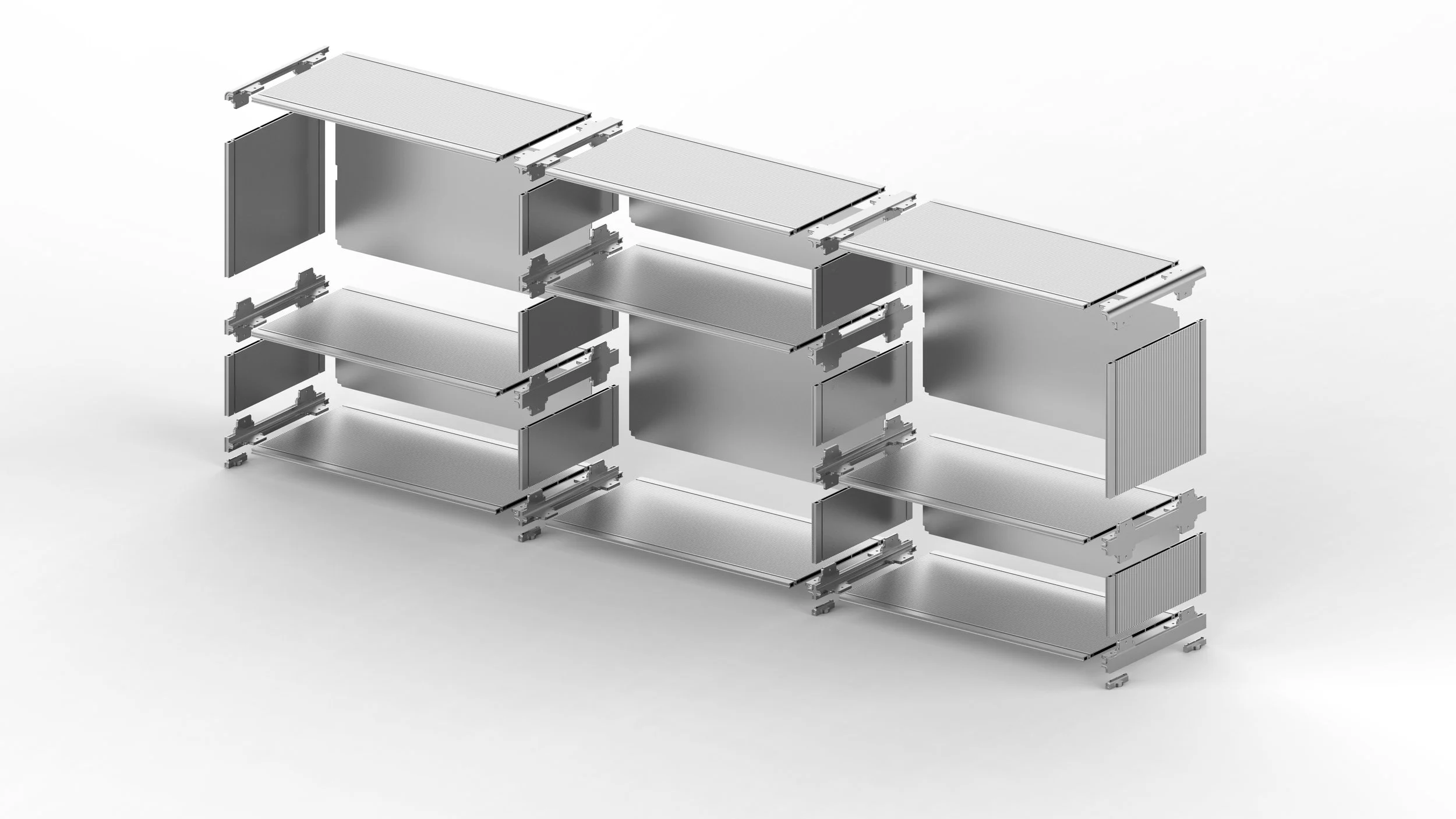
Using the research insights and early design principles, we explored three different concept directions for the modular system. Each concept tested a different relationship between assembly logic, visual clarity, and manufacturability.
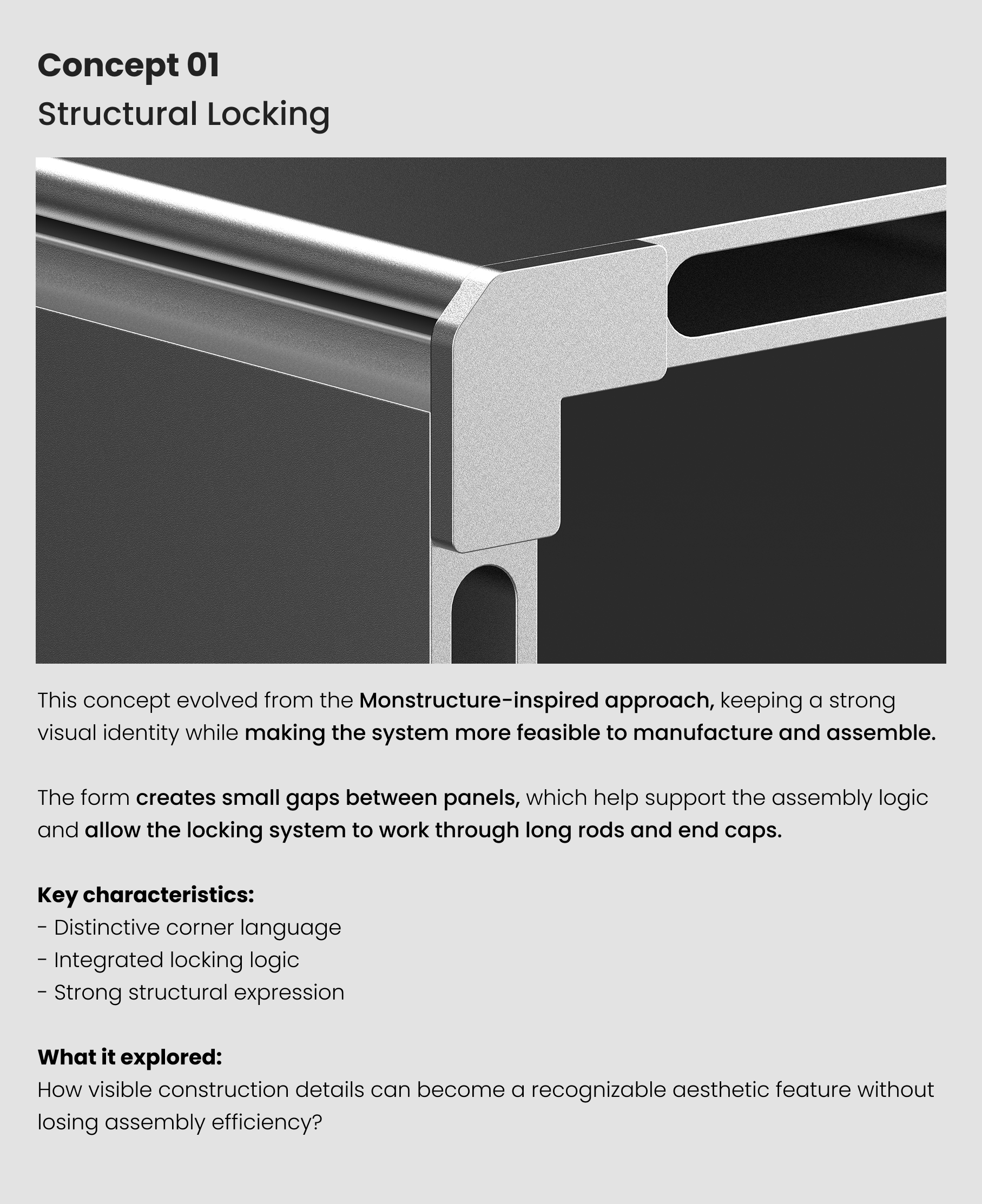
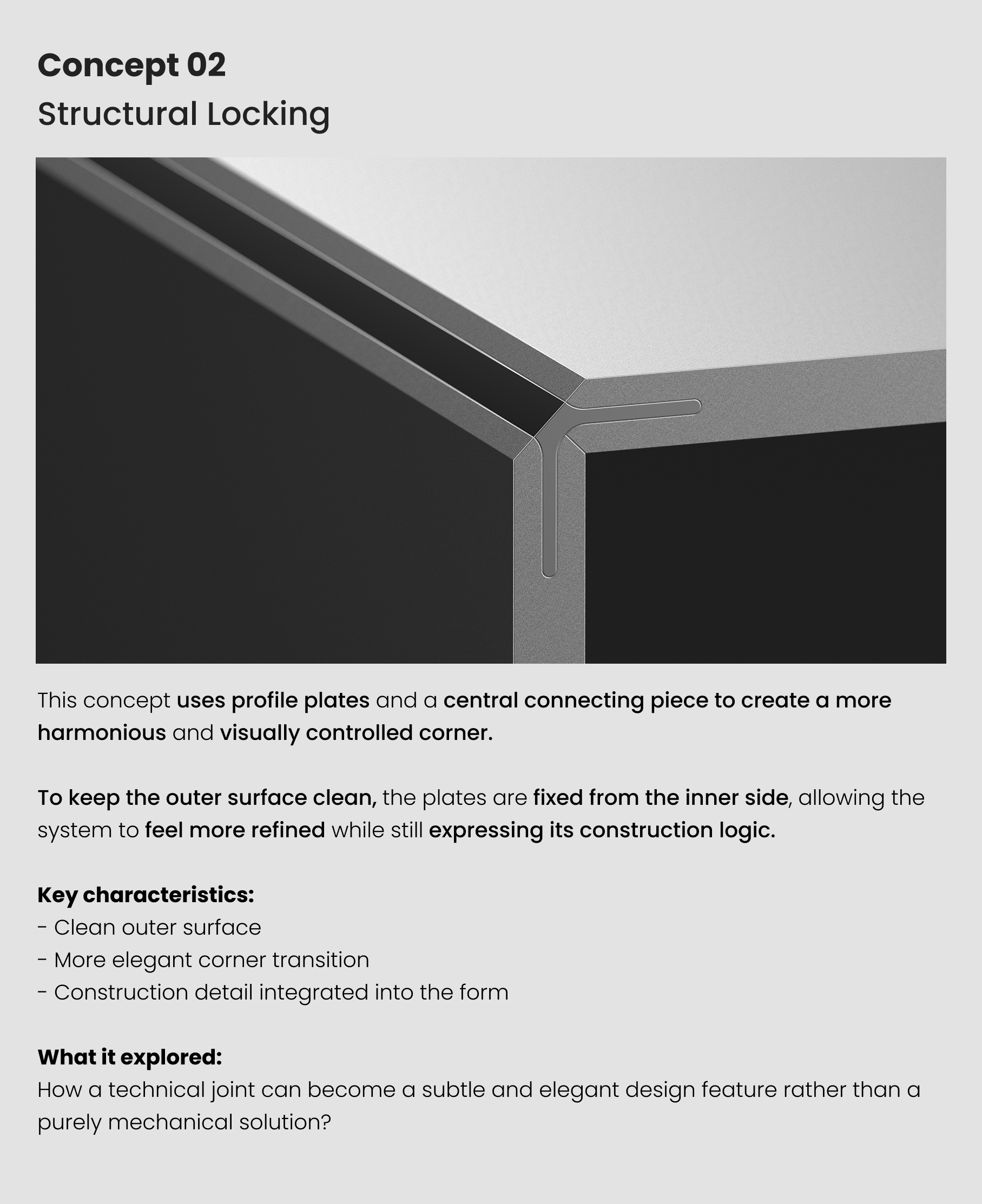

All three concepts were explored in a draft design stage to evaluate their technical feasibility, manufacturing potential, and aesthetic quality.
Rather than selecting a direction based on form alone, the aim was to understand which approach could create the best balance between identity, assembly logic, and production viability.
Outcome
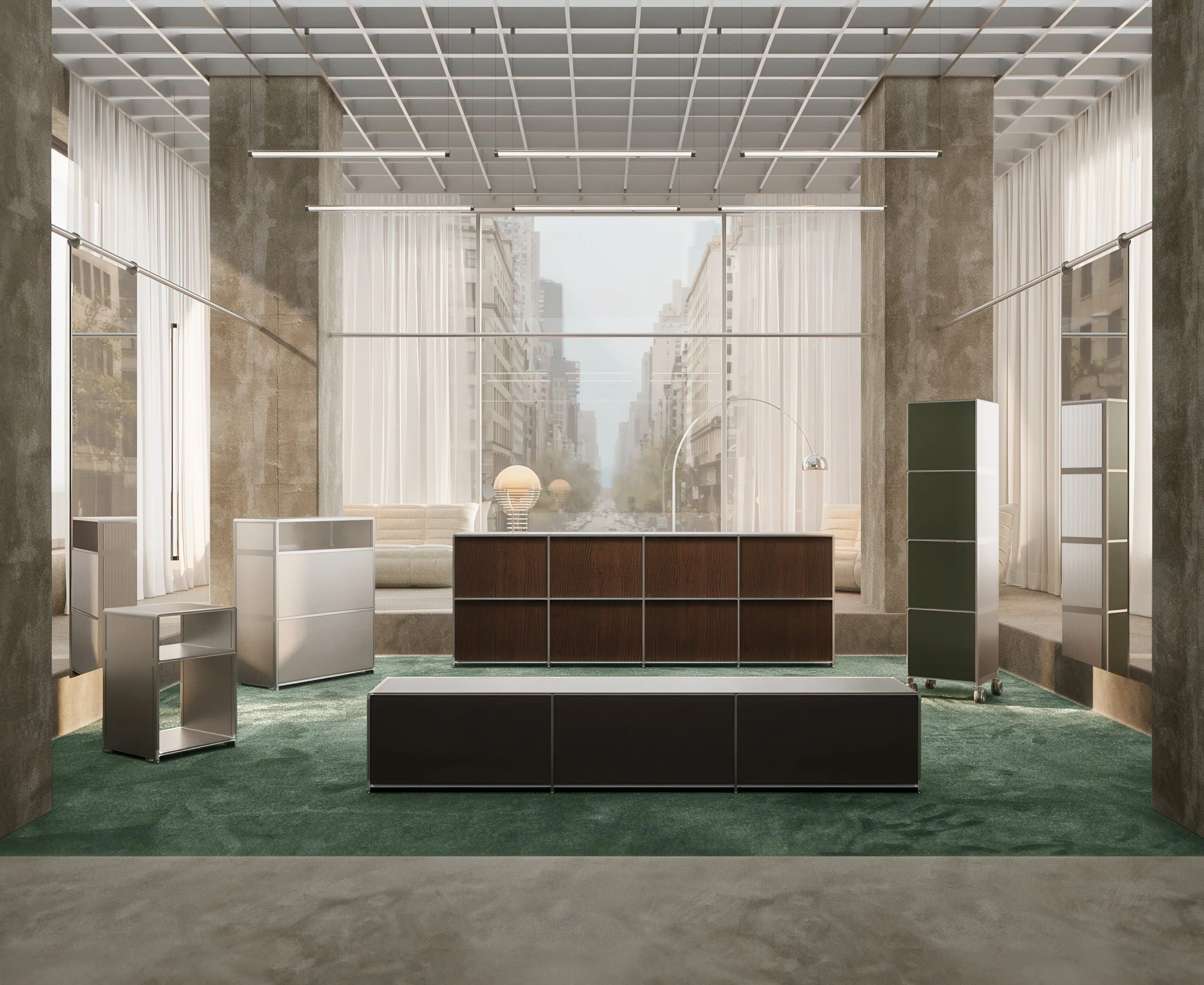
The project resulted in a set of strategic concept directions for MOD Studio’s modular furniture system.
Each direction explored a different way of balancing structure, assembly logic, manufacturability, and product identity.
Rather than treating modularity as a purely functional feature, the project framed it as part of the system’s visual language. The outcome shows how joints, profiles, corners, and material transitions can define not only how the product is built, but also how it is recognized.
The final directions created a foundation for a system that could feel flexible, precise, and characterful, while still being suitable for contemporary living and working spaces.
Reflection

This project was a good reminder that modular furniture is not only about flexibility.
A system can be easy to assemble, reconfigure, and manufacture: but still needs a clear reason to be remembered.
For me, the most valuable part of the project was using research to define direction before form. By looking at users, competitors, materials, and construction logic, we could turn technical decisions into design principles.
Details like joints, corners, profiles, and material finishes are never just technical choices.
They are part of how a product communicates.